A repair appointment usually goes better when the home is ready before the technician arrives. That does not mean turning into an amateur appliance expert. It means clearing the path, gathering the right details, and making it easy for the technician to diagnose the issue quickly and safely.
A little preparation can save time, reduce back-and-forth, and help you get a clearer answer about cost, parts, and next steps. Whether the problem is a refrigerator that is warming up, a washer that will not drain, or an oven that refuses to heat, the same basic approach works.
Why preparation makes a real difference
Appliances fail in ways that can look random from the outside. A dishwasher may leak only on heavy cycles. A dryer may heat well one day and stay cool the next. A refrigerator may sound normal while slowly losing temperature. When a technician walks in with solid information and full access to the unit, diagnosis becomes much more efficient.
That matters for your schedule and your budget. The more clearly you can describe the problem, the easier it is to narrow the list of likely causes. In some cases, sharing the model number and symptoms ahead of time may even help the company prepare for likely parts needs before the appointment begins.
Start with the basic appliance details
Before the visit, collect the facts tied to the appliance itself. This is often the fastest way to move from guesswork to a repair plan. Most model and serial numbers are found inside the door frame, on the side wall, behind a drawer, or on a label near the back of the unit. If the label is hard to read, a quick photo on your phone is usually enough.
It also helps to gather any paperwork you still have, including the owner’s manual, purchase receipt, extended warranty details, or records from a past repair. If you do not have the manual, many brands offer a PDF on their website once you enter the model number.
| What to gather | Why it helps |
|---|---|
| Brand, model, and serial number | Confirms the exact machine and helps identify compatible parts |
| Approximate age or purchase date | Gives context on wear, expected lifespan, and value of repair |
| Manual or PDF guide | Helps locate features, filters, and error code meanings |
| Warranty or service plan info | Shows whether coverage may still apply |
| Past repair records | Reveals repeat issues or recently replaced parts |
One photo album on your phone for appliance information can be surprisingly useful. Keep the label photo, receipt, and any warranty screenshot in one place so you are not searching for them while the technician is waiting.
Write down the symptoms, not just the problem
Saying “my dryer is broken” is honest, but it does not give much to work with. A better description sounds more like this: “The drum turns, but there is no heat. It started three days ago. It happened on every cycle since then. There is no error code.”
Those details matter. Timing, frequency, sounds, smells, and visible leaks can point to very different causes. If the issue happens only once in a while, record a short video when you can. A video of a grinding noise, a flashing control panel, or water pooling under the door may help far more than memory alone.
Helpful notes to have ready include:
- Error codes
- New noises
- Burning or musty odors
- Water leaks
- Slow cooling or heating
- Cycles stopping early
- Problems that happen only sometimes
If you have already noticed a pattern, write that down too. “Leak appears only during rinse.” “Freezer is cold, fresh-food section is warm.” “Oven takes much longer than usual to preheat.” Clear observations save time because they help the technician focus on the most likely systems first.
Do the safe checks, then stop there
It makes sense to rule out the simple issues before the appointment. A tripped breaker, a loose plug, a child lock, or a closed water valve can mimic a major failure. These are quick checks, and they are safe when done carefully.
Try the outlet with another device if the appliance appears dead. Reset the appliance if the manufacturer allows it by unplugging it briefly or switching the breaker off and back on. Check that the dryer lint screen is clean and the vent is not crushed. Confirm that a dishwasher or washing machine water supply valve is open. Look at the display for a lock mode or delay setting that may have been activated by accident.
What you should not do is just as important:
- Do not remove panels: Internal access can expose wiring, sharp edges, or moving parts
- Do not work on gas connections: If you suspect a gas issue, stop and call for service right away
- Do not guess on breakers or valves: If you are unsure, leave the unit as-is and explain that during the visit
- Do not keep testing a failing appliance: Repeated use can make damage worse
That line matters. Safe checks are helpful. Internal repairs are not a good DIY project unless you are trained for them.
Prepare the space around the appliance
A technician needs room to inspect, test, and sometimes pull the appliance forward. That is hard to do when a laundry basket, trash can, rug, or stack of pantry items is in the way. Clearing a few feet around the appliance can shave valuable time off the visit.
Make sure nearby doors and cabinets can open fully. If the appliance is in a tight laundry closet or built into cabinetry, remove anything that blocks access to the sides, rear, or lower panel. For a refrigerator repair, it may also help to move fragile items off the top of the unit and give some space in front of the doors.
Pets and small children should be kept away from the work area during the appointment. This is not only about convenience. It is a safety issue, especially when tools, sharp metal edges, hot surfaces, or a moved appliance are involved.
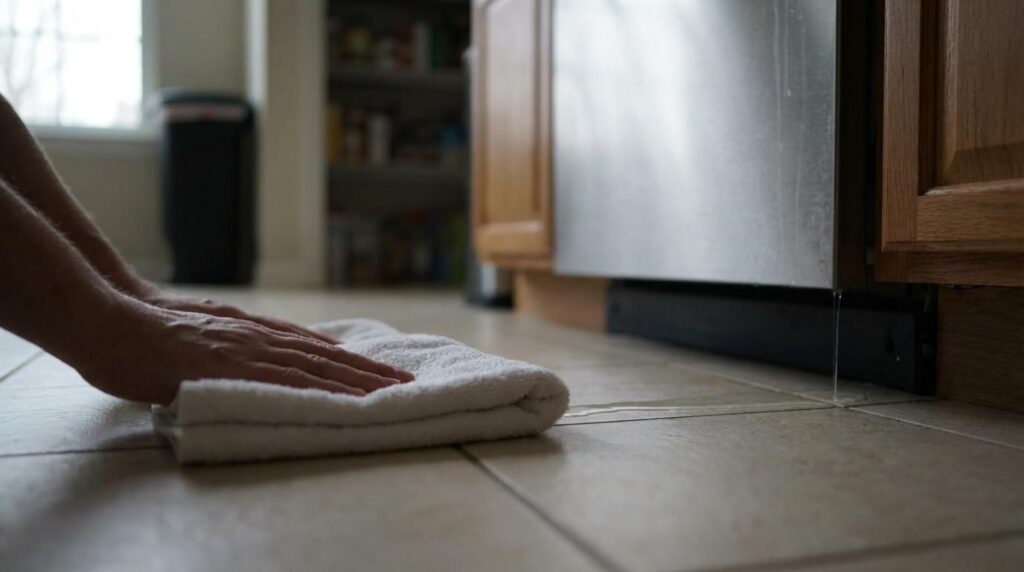
If the appliance has been leaking, place a towel or shallow pan nearby before the technician arrives. It keeps the area cleaner and makes the problem easier to inspect.
Take simple safety steps before the visit
If the company has advised you to do so, turn off the appliance before service. That may mean unplugging it, switching off the breaker, closing the water valve, or shutting off the gas valve for a gas appliance. Only do what you can identify with confidence.
If you are not sure which shutoff belongs to the appliance, do not guess. It is perfectly fine to leave that step for the technician. A clear explanation is better than a mistaken shutoff that affects another appliance or part of the home.
One more practical tip: if the unit stores food or laundry, plan around that. A refrigerator or freezer issue may require moving perishables to a cooler. A washer repair is easier when the machine is empty and the last wet load has already been handled.
Confirm the appointment details before arrival
A repair visit should not feel vague. Before the day of service, confirm the arrival window, the service call or diagnostic fee, accepted payment methods, and whether the fee is applied toward the repair if you approve the work. Ask what happens if a second visit is needed for parts.
It is also smart to share the full appliance details when scheduling, not after the technician arrives. Brand, model number, and a short symptom summary help the office send the right professional and set the visit up well from the start.
A few questions worth asking:
- Arrival window: Is the visit scheduled as a specific time or a time range?
- Diagnostic fee: Is there a service charge, and is any part of it credited toward repair?
- Approval process: Will you receive a quote before any work begins?
- Parts follow-up: If a part must be ordered, how is the return visit scheduled?
- Warranty: What guarantee applies to parts and labor after the repair?
Keep your phone nearby on appointment day. Many service companies send text updates or call ahead when the technician is on the way, which makes the wait easier to manage.
If you are booking local service in the greater Los Angeles area
For homeowners and renters across Los Angeles, timing and communication matter almost as much as the repair itself. If you are booking with a local company, choose one that clearly [states service areas,](https://www.prosfixappliances.com/service-areas/) repair scope, and how estimates are handled. That cuts down on surprises.
Pros Fix Appliances offers repair and maintenance for major household appliances across the greater Los Angeles area, including Los Angeles, Burbank, Glendale, Pasadena, Santa Clarita, and the San Fernando Valley. Appointments can be scheduled online or by phone, which makes it easier to send the appliance details in advance. The company also states that licensed technicians handle service, and a 90-day warranty applies to parts and services.
That kind of clarity helps when you are planning the visit. It is also worth asking whether the company works on your brand, whether the issue falls under a standard repair visit, and whether any current promotions or discounts apply. If you qualify for senior or veteran discounts, ask before the appointment is finalized.
Be ready for a short conversation when the technician arrives
The first few minutes of the visit are often the most useful. This is when you can show the model label photo, describe the issue in a few clear sentences, and point out anything unusual you noticed. If the appliance displays an error code only once in a while, mention exactly when it tends to appear.
Try to keep that explanation focused. A concise timeline is ideal: when the issue started, whether it is constant or intermittent, what you already checked, and whether the problem changed over time. This gives the technician a strong starting point without burying the main facts.
It also helps to have a note app open or a small notepad nearby. If the technician explains a maintenance step, a part delay, or signs of future wear, write it down. Those notes are useful later, especially if you are deciding whether to repair now, watch the unit for a few weeks, or plan for replacement down the road.
A well-prepared appointment does not make the repair magically simple. What it does do is create better conditions for a fast, accurate, and safe visit. And when that happens, you are far more likely to get a straightforward diagnosis, a clear quote, and a practical path back to a working kitchen or laundry room.