You walk into your living room and step into a puddle—your air conditioner is dumping water all over your beautiful hardwood floors, and you can practically hear your wallet crying. Water leaking from your AC unit indoors is never normal and demands immediate attention before it causes thousands in water damage.
When your air conditioner leaks water inside your home, the culprit is almost always a problem with the condensate drainage system. During normal operation, your AC removes humidity from the air, creating condensation that should drain harmlessly outside. When this system fails, water backs up and overflows into your living space.
Let’s dive into the most common causes and walk through the fixes that’ll get your floors dry and your AC running properly again.
Understanding Your AC’s Drainage System
Your air conditioner’s condensate system works like a miniature plumbing network. As warm, humid air passes over the cold evaporator coils, moisture condenses and drips into a primary drain pan. From there, water flows through a condensate drain line (usually a PVC pipe) that carries it outside your home.
Most systems also have a secondary drain pan positioned beneath the primary pan as a backup. When the primary drainage fails, water collects in this safety pan. However, when both systems become overwhelmed or clogged, water has nowhere to go but onto your floors.
The drainage system relies on gravity and proper slope to function correctly. Any disruption—whether from clogs, improper installation, or component failure—can cause water to back up and overflow.
Check your AC unit now: Look for standing water around the indoor unit and identify where the water is coming from—the primary pan, secondary pan, or drain line connections.
Identifying Clogged Condensate Drain Lines
Clogged drain lines cause 90% of indoor AC water leaks, making this your first diagnostic target. The condensate drain line typically exits your home near the outdoor unit and should have a steady drip during AC operation.
Signs of a clogged drain line include: • No water dripping from the exterior drain line during AC operation • Water pooling around the indoor air handler • Musty odors near the AC unit • Gurgling sounds from the drain line • Water stains on walls or ceilings near ductwork
The most common clog locations are at the drain line exit point outside and where the line connects to the drain pan. Algae, mold, dirt, and debris accumulate over time, especially in the dark, moist environment of the drain line.
To check for clogs, locate the drain line exit point outside your home—it’s usually a white or gray PVC pipe near your outdoor unit. During AC operation, you should see water steadily dripping from this pipe. If there’s no flow, you’ve confirmed a blockage.
Take action immediately: Turn off your AC to prevent further water accumulation while you work on clearing the clog.
Clearing Drain Line Clogs Step-by-Step

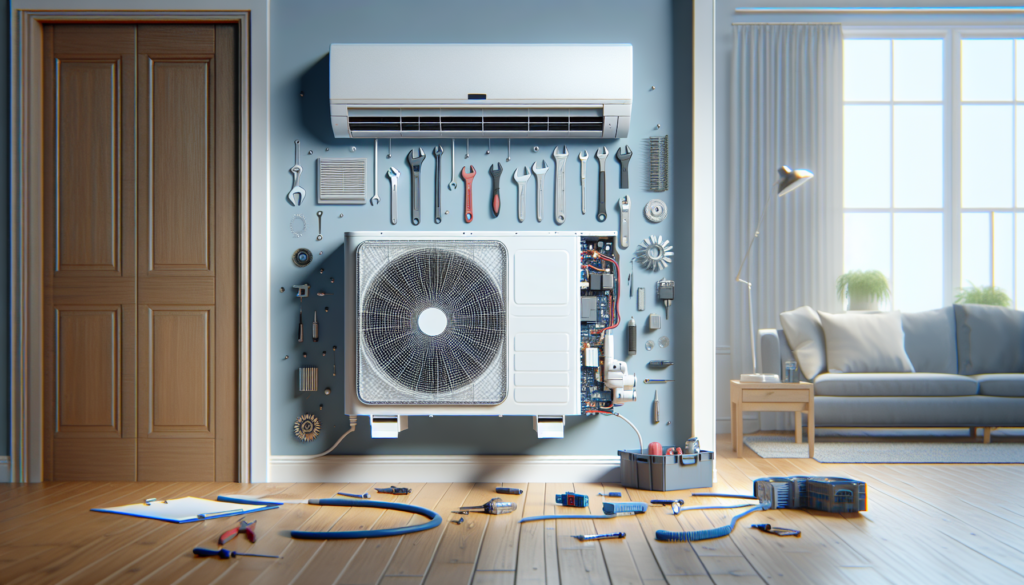
AI Generated image · DALL-E 3
Safety first: Turn off power to your AC unit at both the thermostat and the electrical panel before beginning any work.
Method 1: Wet/Dry Vacuum Suction
- Locate the drain line exit outside your home
- Remove any visible debris from the pipe opening
- Attach your wet/dry vacuum securely to the drain line end
- Run the vacuum for 2-3 minutes to suction out clogs
- Check inside the vacuum canister for extracted debris
Method 2: Compressed Air Blow-Out
- Disconnect the drain line from the indoor unit (if accessible)
- Use an air compressor or shop blower to force air through the line
- Work from the indoor unit toward the outdoor exit
- Never use excessive pressure—you could damage the line or push clogs deeper
Method 3: Chemical Treatment
- Pour 1 cup of white vinegar into the drain pan
- Allow it to sit for 30 minutes to dissolve organic buildup
- Follow with a gallon of clean water to flush the system
- Check the outdoor drain line for proper flow
Test your work: Turn the AC back on and monitor the outdoor drain line for proper water flow within 15 minutes of operation.
Fixing Overflowing Drain Pans
When drain pans overflow, the problem extends beyond simple clogs. Cracked drain pans, improper positioning, or inadequate drainage capacity can cause persistent water problems.
Inspecting the Primary Drain Pan: The primary pan sits directly beneath the evaporator coils and may be difficult to access. Look for: • Visible cracks or holes in the pan • Rust or corrosion around drain connections • Pan positioned incorrectly or not level • Debris blocking the pan’s drain outlet
Secondary Drain Pan Issues: The backup drain pan should only contain water when the primary system fails. If you find water here regularly: • The primary drain system needs repair • The secondary pan may be cracked or damaged • Float switches (if equipped) may not be functioning
Emergency Fix for Cracked Pans:
- Clean and dry the damaged area completely
- Apply waterproof epoxy putty to seal small cracks
- Allow 24 hours curing time before resuming AC operation
- Plan for permanent pan replacement as soon as possible
Monitor your repair: Check both drain pans daily for the first week after any fix to ensure the problem doesn’t return.
Preventing Future AC Water Leaks
Regular maintenance prevents 95% of AC drainage problems and saves you from costly emergency repairs and water damage restoration.
Monthly Tasks: • Check outdoor drain line for proper water flow during AC operation • Pour 1 cup of vinegar down the drain pan monthly during cooling season • Inspect visible drain pans for standing water or debris • Replace air filters regularly to prevent system contamination
Seasonal Maintenance: • Schedule professional coil cleaning annually • Have drain lines professionally flushed and treated • Test float switches and secondary drain systems • Inspect and seal any gaps in drain pan connections
Warning Signs to Watch: • Reduced cooling efficiency • Higher humidity levels indoors • Musty odors from vents or near the AC unit • Any visible moisture around the indoor unit
Consider installing a condensate drain line alarm that alerts you immediately when water levels rise in the secondary pan. These inexpensive devices can prevent major water damage by catching problems early.
appliance water leak prevention
Professional HVAC technicians recommend treating your AC’s drainage system with the same importance as any other plumbing in your home. Energy Star AC maintenance guidelines emphasize that proper drainage maintenance extends equipment life and prevents costly repairs.
Frequently Asked Questions
Q: How often should I clean my AC drain line? Clean your condensate drain line monthly during cooling season with vinegar, and schedule professional cleaning annually for best results.
Q: Is it normal for my AC to produce a lot of water? A properly functioning AC can produce 5-20 gallons of condensate daily, depending on humidity levels and system size. All this water should drain outside, never indoors.
Q: Can I use bleach to clean my AC drain line? Avoid bleach as it can damage rubber seals and metal components. White vinegar is safer and equally effective for removing organic buildup.
Q: Why does my AC leak water only sometimes? Intermittent leaks often indicate partial clogs that worsen during peak cooling periods when condensate production is highest, or failing drain pan components.
Q: Should I turn off my AC if it’s leaking water inside? Yes, immediately turn off your AC to prevent further water damage and potential electrical hazards. Address the drainage problem before resuming operation.
Book a Repair Today
Don’t let a simple drainage problem turn into expensive water damage and major AC repairs. At Pros Fix Appliances, our certified technicians have the expertise and tools to diagnose and fix all types of AC water leak issues quickly and permanently.
Whether you’re dealing with stubborn drain clogs, cracked drain pans, or complex drainage system failures, we’ll get your AC running properly and your home dry again. Our same-day service and upfront pricing mean no surprises and no delays.
Call us now for fast, professional AC repair that protects both your comfort and your home. Your floors (and your peace of mind) will thank you.