Nothing ruins a morning routine quite like stepping into an ice-cold shower when you’re expecting steamy hot water. Over 80% of water heater failures stem from heating element or thermostat malfunctions, making these the first components any homeowner should check when hot water suddenly disappears.
Understanding Your Water Heater’s Heating System

AI Generated image · DALL-E 3
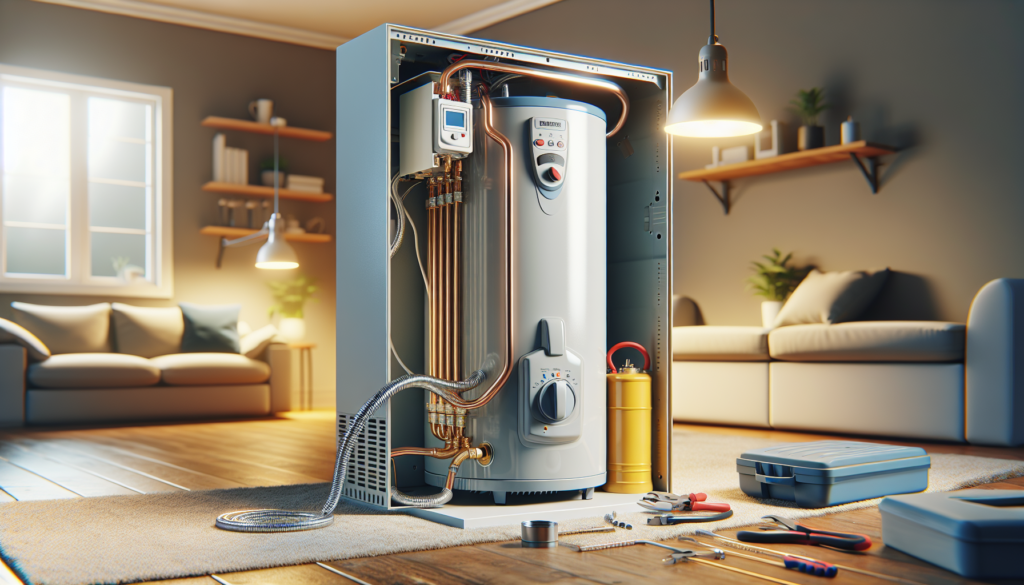
Electric water heaters rely on two heating elements working in sequence to maintain your hot water supply. The upper element heats first, controlled by its own thermostat, then passes power to the lower element once the upper portion reaches temperature.
When this system fails, you’ll notice these telltale signs: • No hot water at any faucet • Water starts hot but quickly turns lukewarm • Inconsistent water temperatures throughout the day • Longer recovery times between hot water uses
Gas water heaters use a different system with a burner and pilot light, but the troubleshooting principles remain similar for temperature control issues.
Start by checking your circuit breaker – a tripped breaker is the easiest fix and happens more often than you’d think.
Testing Your Water Heater’s Heating Elements

AI Generated image · DALL-E 3
Before replacing anything, you need to determine which component has failed. Turn off power at the circuit breaker – this is absolutely critical for safety.
Remove the access panels on your water heater (usually two panels on the side). You’ll see insulation covering each element – carefully pull this back to expose the wiring.
Use a multimeter to test each heating element:
- Set your multimeter to resistance (ohms)
- Touch one probe to each heating element terminal
- A good element reads 10-16 ohms
- An infinite reading means the element is burned out
- A zero reading indicates the element is shorted
Test both upper and lower elements – often one fails while the other continues working, giving you partial hot water that’s confusing to diagnose.
Check the continuity by testing from each terminal to the element mounting bracket – you should get no continuity (infinite resistance) to ground.
Diagnosing Faulty Water Heater Thermostats

AI Generated image · DALL-E 3
Thermostats fail more frequently than heating elements, but they’re trickier to test accurately. The upper thermostat controls the entire system and sends power to the lower thermostat, so upper thermostat failure means no hot water at all.
Look for these thermostat warning signs: • Reset button keeps tripping • No power reaching the heating elements • Water temperature doesn’t match thermostat setting • Elements test good but still no heat
Press the reset button firmly – it should click when properly reset. If it immediately trips again, you likely have a shorted heating element or faulty thermostat.
Test for power at the thermostat terminals with your multimeter set to AC voltage. With power restored, you should read 240 volts across the input terminals. If voltage is present at input but not at output terminals, the thermostat needs replacement.
Replace both thermostats together – they work as a matched pair and mixing old with new can cause future problems. electric range burner not working
Step-by-Step Heating Element Replacement
Replacing a faulty heating element requires draining your water heater tank – plan for this to take 2-3 hours total.
Safety first: Turn off power and water supply before starting any work.
Follow these replacement steps:
- Drain the tank until water level drops below the element
- Disconnect the electrical wires from the old element
- Use an element wrench to unscrew the old element
- Clean the threads and install a new gasket
- Thread in the new element hand-tight, then snug with the wrench
- Reconnect the wires to the same terminals
- Refill the tank completely before restoring power
Never energize elements when the tank isn’t full – they’ll burn out instantly without water surrounding them.
Choose the correct wattage replacement element (usually 3500W or 4500W) – check your old element’s label or your water heater manual for specifications.
Most homeowners can complete this repair with basic tools, but don’t hesitate to call professionals if you’re uncomfortable working with electrical components. dishwasher not draining water
Replacing Water Heater Thermostats
Thermostat replacement requires more electrical work than element replacement, but follows a logical sequence that any careful homeowner can master.
Document your wire connections with photos before disconnecting anything – thermostats have multiple terminals and proper wiring is crucial.
Installation process:
- Remove the old thermostat by unscrewing the mounting bracket
- Transfer wires one at a time to the matching terminals on the new thermostat
- Set the temperature to match your old setting (usually 120°F)
- Secure the new thermostat to the tank
- Replace insulation and access panels
- Restore power and test operation
Upper and lower thermostats aren’t identical – make sure you’re installing the correct thermostat in each position. The upper thermostat has more terminals and includes the reset function.
After installation, monitor your water heater for 24 hours to ensure proper heating cycles and temperature maintenance.
If problems persist after replacing both elements and thermostats, you may have tank corrosion or sediment buildup requiring professional attention. energy-efficient water heating tips
Preventing Future Water Heater Problems
Regular maintenance prevents most heating element and thermostat failures, extending your water heater’s lifespan significantly.
Flush your tank annually to remove sediment that causes elements to overheat and burn out. Hard water areas may need more frequent flushing.
Check these maintenance items twice yearly: • Test the temperature relief valve • Inspect anode rod condition • Verify proper insulation around pipes • Clean lint and debris from around the unit • Test water temperature at faucets
Set your thermostat to 120°F – higher temperatures waste energy and cause faster component wear, while lower temperatures may not provide adequate hot water volume.
Consider installing a water softener if you have hard water – mineral buildup is the leading cause of premature heating element failure. dryer not heating up
Schedule professional maintenance every 2-3 years to catch problems before they leave you with cold showers.
Frequently Asked Questions
Q: How do I know if my heating element or thermostat is bad? Test heating elements with a multimeter for 10-16 ohm resistance. Thermostats require voltage testing and are harder to diagnose – if elements test good but don’t heat, suspect the thermostat.
Q: Can I replace just one heating element? Yes, but it’s often wise to replace both elements together since they’re similar in age and stress levels. Mismatched elements can cause uneven heating.
Q: Why does my water heater keep tripping the reset button? Usually indicates a shorted heating element, loose electrical connection, or failed thermostat. Check element resistance and wire connections first.
Q: How long should heating elements last? Quality elements typically last 6-10 years with proper maintenance. Hard water and high temperatures reduce lifespan significantly.
Q: Should I attempt this repair myself or call a professional? If you’re comfortable with electrical work and have a multimeter, element replacement is straightforward. Call professionals for complex wiring issues or if you’re unsure about any safety aspects.
Book a Repair Today
Don’t let a faulty water heater disrupt your daily routine any longer. At Pros Fix Appliances, our certified technicians specialize in water heater diagnostics and repairs, ensuring you get reliable hot water fast. Whether you need heating element replacement, thermostat repair, or complete system troubleshooting, we have the expertise and parts to fix it right the first time. Contact us today to schedule your water heater repair and get back to enjoying consistent hot water throughout your home.