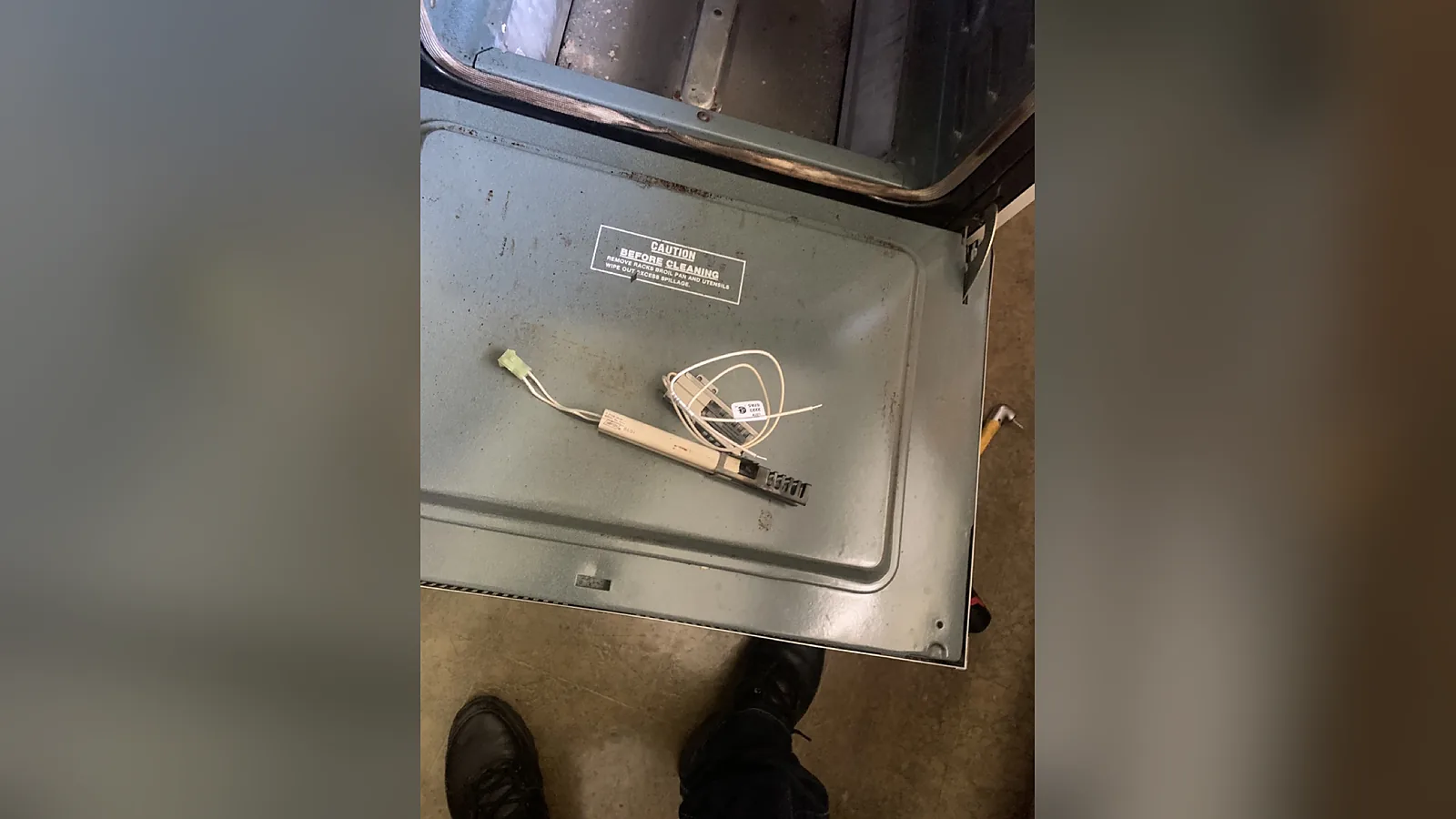
Short answer: When a gas oven igniter is glowing but not lighting, the igniter has usually worn out. A healthy glow-bar igniter draws about 3.2–3.6 amps, enough to open the oven's gas safety valve; a weak one still glows but draws too little, so the valve stays shut. A new bake or broil igniter typically costs $170–$320 in Los Angeles.
This guide is for anyone whose gas oven igniter glows while the oven stays cold, or lights late with a soft boom. It covers how the igniter opens the gas valve, the signs that separate a weak igniter from a valve or gas-supply problem, what you can safely check, and the Los Angeles repair cost.
Why is my oven igniter glowing but not lighting?
An oven igniter can glow without being strong enough to open the gas valve. Most gas ovens use a hot-surface "glow-bar" igniter wired in series with the gas safety valve, and the valve opens only when enough current flows through the igniter to make it hot enough to light the gas.
As the igniter heats, its current climbs. A GE Appliances technical service guide specifies a steady 3.2–3.6 amps, reached within 30–60 seconds from a cold start. Whirlpool's service manual says the valve needs at least 3.2 amps, by which point the igniter is above 1,800°F. Then gas flows and the burner lights.
A worn igniter still glows, but its current never climbs high enough, so the valve keeps the gas off. That's the safety design working, and it's why technicians measure current with a clamp-on ammeter instead of judging by the glow.
What are the signs your oven igniter needs replacement?
The clearest sign is an igniter that glows for 90 seconds or more with no flame. Slower preheating, late ignition and an oven that can't hold its temperature point the same way.
- Glows, no flame. Normally the burner lights within about a minute of the glow.
- Preheating keeps getting slower. A weakening igniter takes longer each time to reach the valve's opening current.
- A soft boom when it lights. Gas collected before it caught. Amana's service manual lists delayed ignition as a symptom to diagnose; stop using the oven until it's checked.
- Temperature drops mid-bake. Every relight needs the igniter to heat up again, and a weak one lags.
- Visible damage. A crack or burned spot on the element. Don't touch it: it's brittle and stays hot.
Igniter, gas valve or gas supply: telling them apart
Whether the oven igniter glows tells you most of the story. A glow with no flame points to the igniter; no glow at all means the igniter burned out or current isn't reaching it, so the valve and control get tested next. Because the igniter and valve share one series circuit, a break in either stops both.
| What you see | Most likely cause | Typical LA price |
|---|---|---|
| Igniter glows, burner never lights | Weak igniter | $170–$320 |
| Lights late with a soft boom | Weak igniter | $170–$320 |
| No glow at all | Burned-out igniter, open safety valve, wiring or a control relay | Igniter $170–$320; relay or board $280–$650; valve priced after testing |
| Broil works, bake doesn't (or the reverse) | The igniter on the side that fails | $170–$320 |
| Cooktop burners won't light either | Gas supply off at the shutoff valve or meter | No repair needed |
If the display is dark and nothing responds, start with our guide to an oven that won't turn on instead.
Bake igniter vs broil igniter
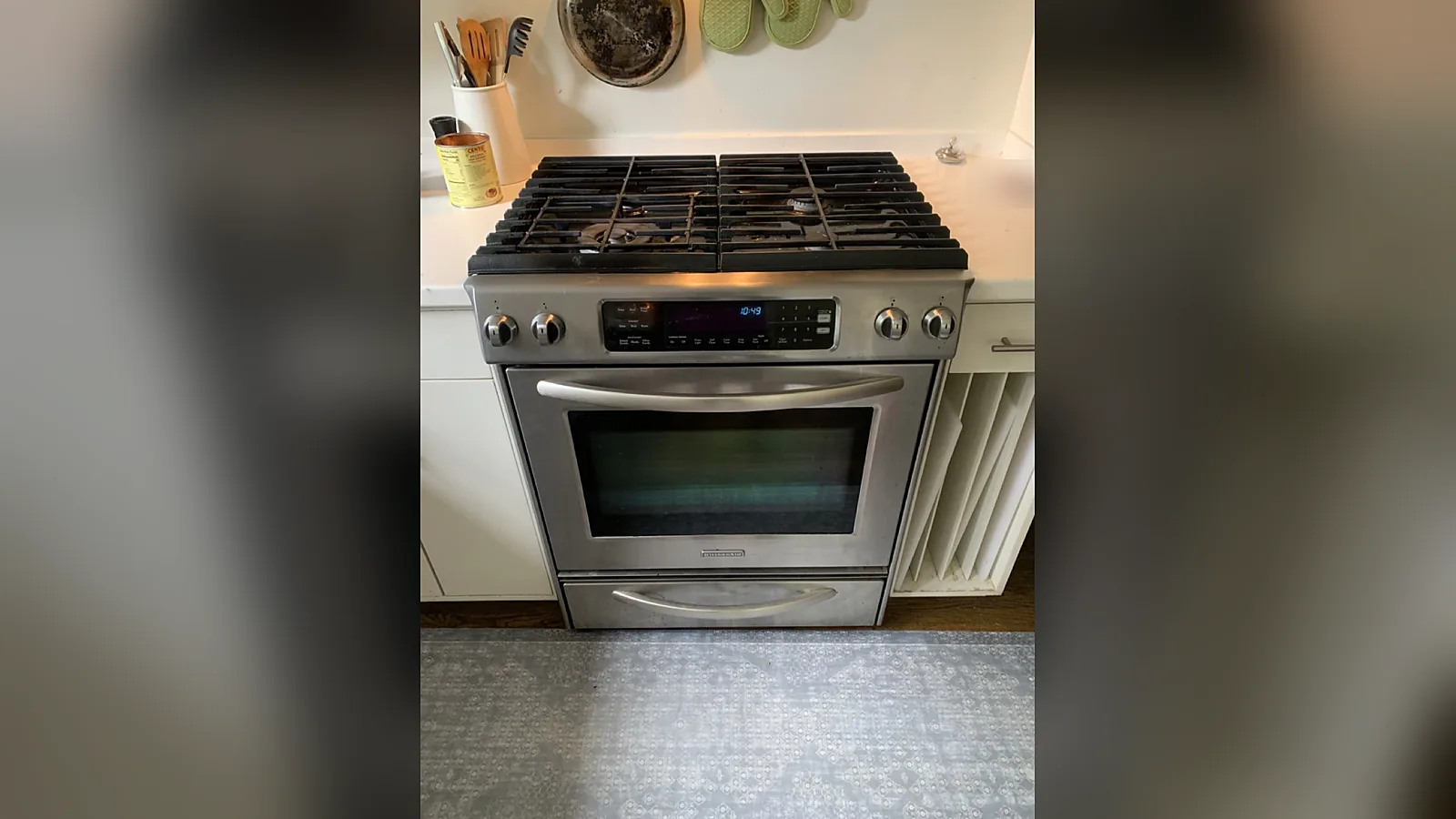
Ovens with a broil burner at the top of the cavity have two igniters, one for bake under the oven floor and one for broil, and the side that won't light is the one that failed. Ranges with a broiler drawer usually have one burner and igniter doing both jobs, so bake and broil stop together.
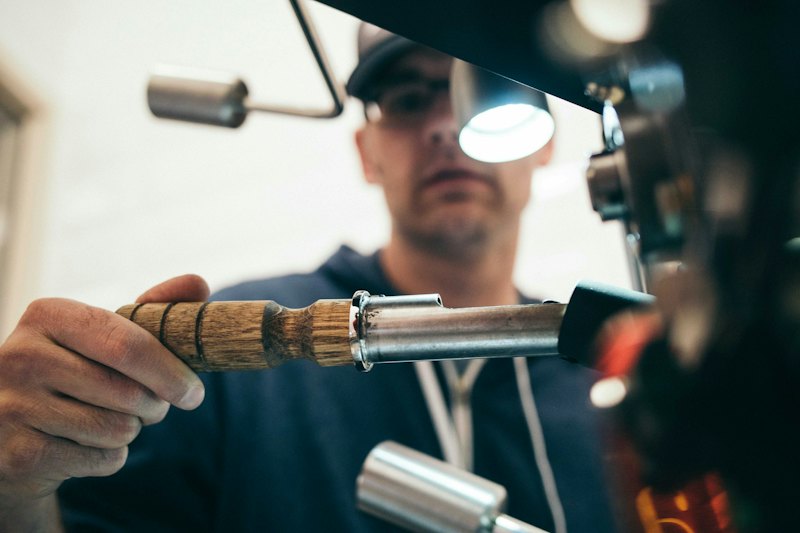
Replacing the bake igniter means lifting out the oven floor panel to reach the burner. Flat igniters like the two in the photo at the top of this page mount right beside the burner. If both igniters are original on an older oven, ask the technician to measure the other one while the oven is open.
Safe checks you can do yourself
You can confirm a weak oven igniter and rule out the gas supply without opening anything. Measuring current and replacing an igniter mean working next to gas connections and 120-volt wiring, so leave those to a technician.
- Smell first. If you smell gas, don't turn lights or appliances on or off; leave and call SoCalGas at 1-800-427-2200 or 911 from outside, as SoCalGas advises.
- Light a cooktop burner. If none light, the shutoff valve behind the range may be closed. If the gas was shut off at the meter, SoCalGas turns it back on; don't do it yourself.
- Time the igniter. Set bake to 350°F, watch through the oven-floor slots, and count the seconds from glow to flame. Repeat on broil.
- Turn it off after 90 seconds with no flame. Don't keep restarting it.
- Cut power before removing any panel, and write down the model number from the label on the oven frame or behind the drawer.
How much does oven igniter replacement cost in Los Angeles?
A bake or broil igniter typically costs $170–$320, parts and labor included. On a professional range such as Wolf or Viking, igniter or valve service runs $320–$720.
The $69 oven diagnostic covers the trip, testing and a written quote, and it's applied to the repair if you approve it. It's the same across Los Angeles, Orange and Ventura counties, with no travel charge. Replaced parts and their labor carry a 30–90-day warranty printed on the invoice.
An igniter passes the 50% rule (repair when the quote is under half the price of a comparable new range) on almost any range with life left, and ranges typically last around 15 years. Our comparison of gas vs electric range repair covers the other common range repairs.
When to call a technician
Call a technician when the oven igniter glows with no flame, the oven lights with a boom, or there's no glow at all. If you smell gas, call SoCalGas or 911 first.
Calls placed before noon are usually seen the same day across Los Angeles, Orange and Ventura counties; later calls typically next business day. Note what the igniter does on bake and broil, and have the model number ready. A GE oven showing an F and a number has a separate fault; see our GE oven F-code guide.
Call (866) 696-7767 or book online, or see our oven repair page for everything else we fix on gas and electric ovens.
Frequently asked questions
How long should an oven igniter glow before the gas lights?
Usually within about a minute; a GE service guide allows 30–60 seconds from a cold start for the igniter to reach full current. If it glows for 90 seconds or more with no flame, the igniter is likely too weak to open the gas valve.
Can I replace an oven igniter myself?
On some models, but it means cutting power, removing the oven floor or broiler panel and connecting the new igniter's leads, often with high-temperature connectors, near the gas valve. A poor connection there is a real risk, and testing first confirms the igniter is actually the fault.
Is an oven igniter that glows but won't light dangerous?
Not by itself: the safety valve stays closed until the igniter draws enough current. Lighting late with a boom is different, because gas collected first, so stop using the oven. If you ever smell gas, leave and call SoCalGas or 911 from outside.
Do I need a new gas valve too?
Usually not; igniters wear out far more often than safety valves. The technician measures the igniter's current first. Only if the current is in spec and the valve still won't open, or its circuit tests open, is the valve replaced.
What's your oven doing?
Still not working? Call before noon and we can usually be there today.
- Diagnostic
- $69applied to the repair
- Same-day
- Call before noonMost LA, OC & Ventura calls seen today
- Warranty
- 30–90 daysparts and labor