Short answer: For DIY appliance repair safety, stick to checks that need no panels removed: the breaker, GFCI outlet, plug, filters, door latches, control lock and demo mode. Stop and call if you smell gas (leave, then call SoCalGas or 911), see sparks or water near wiring, or would need to open a microwave cabinet, 240-volt wiring or the refrigerant system.
This guide is for homeowners, renters and property managers who want to try the simple things first without getting hurt: the safe checks, the hard stops and whom to call.
Which appliance checks are safe to do yourself?
Safe appliance checks need no tools and no panels removed: power, settings, filters and latches. Each row also shows when to stop.
| Appliance | Safe to check | Stop and call if | Typical LA repair |
|---|---|---|---|
| Refrigerator or freezer | Breaker, plug, temperature setting, demo mode, blocked vents, door gasket, condenser coils (unplugged) | Clicks but won't start, or heavy frost on the freezer's back wall | $160–$360 for relays, fans and defrost parts; $650–$1,400 sealed system |
| Washer | Water valves open, hoses not kinked, lid closed, control lock, front-loader drain filter (unplugged) | Burning smell, water near the outlet, or a locked door with water inside | $160–$300 lid or door lock; $190–$340 drain pump |
| Dryer | Breaker, lint filter, outside vent flap opens | Burning smell, a cabinet too hot to touch, or a gas smell | $140–$240 thermal fuse or thermostat; $180–$320 heating element |
| Dishwasher | Breaker or GFCI, door latched, control lock, filter | Water under it or a burning smell | $160–$290 door latch; $190–$330 drain pump |
| Oven, range or cooktop | Breaker, control lock, burner caps seated (cooktop cool) | Gas smell, a burner that won't light on a second try, or a sparking element | $170–$320 igniter; $180–$340 bake or broil element |
| Built-in microwave | Breaker, door closes firmly, control lock | Sparks inside, a damaged door, or running with the door open | $140–$240 door switch or fuse; $260–$480 magnetron |
How to reset a tripped breaker or GFCI outlet
Resetting a tripped breaker or GFCI outlet once is safe. A GFCI is the outlet with TEST and RESET buttons that cuts power when current leaks.
- Turn the appliance off, and unplug it only with dry hands on a dry floor.
- At the panel, find the breaker whose handle sits in the middle or OFF position. Ranges and electric dryers use a double breaker with two joined handles.
- Push the handle firmly to OFF, then back to ON.
- For a GFCI, press RESET; the GFCI protecting an outlet can be a nearby outlet on the same circuit.
- Turn the appliance back on. If anything trips again, leave it off and call.
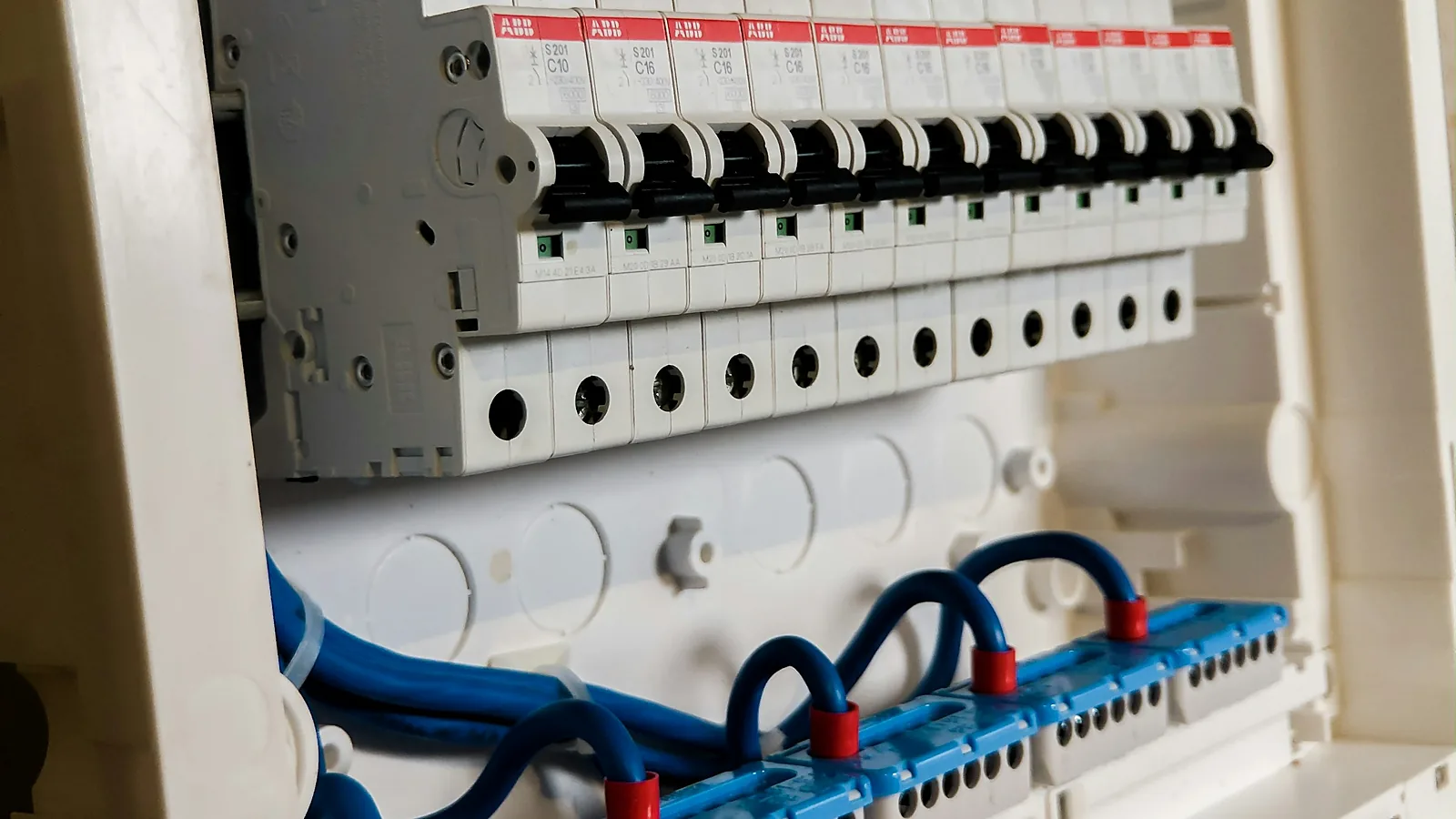
Stop point: if the panel is wet, scorched or hot, or a breaker won't stay on, don't touch it; that's a job for a licensed electrician.
What should you do if you smell gas near an appliance?
If you smell gas near an appliance, leave first and call from outside, as SoCalGas advises:
- Get everyone, pets included, out of the home now.
- Don't switch lights or appliances on or off, light anything or use a phone until you're outside.
- From a safe place, call SoCalGas at 1-800-427-2200, or 911 if anyone could be hurt or you can't reach SoCalGas. If another utility supplies your gas, call it instead.
- Stay out until the gas company says it's safe, then call us about the appliance.
If a carbon monoxide alarm sounds, get everyone outside and call 911; carbon monoxide has no smell.
Repairs to leave to a technician
Four kinds of appliance repair are hard stops for DIY, because the risk is shock, fire, gas or a bigger bill. And on any appliance, never bypass a door switch, lid lock or thermal fuse.
Anything inside a microwave cabinet
A microwave's high-voltage capacitor can hold a dangerous charge even unplugged, so never remove the cabinet. The FDA says not to use a microwave whose door doesn't close firmly or is bent or damaged.
240-volt wiring on ranges and dryers
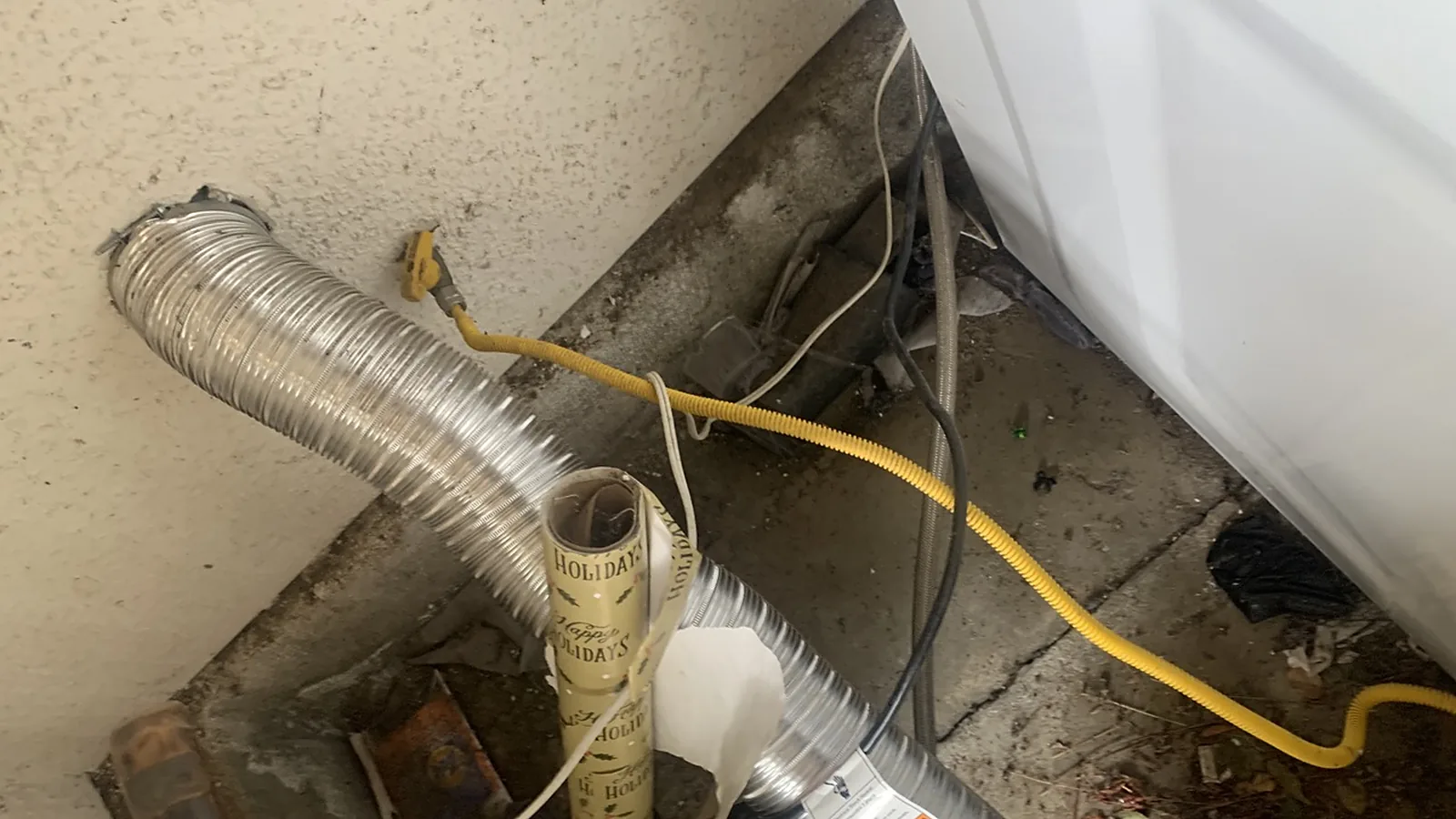
Electric ranges, wall ovens and dryers run on 240-volt circuits, twice the voltage of a standard outlet. Checking the breaker is fine; opening the terminal block or wiring is not. Don't pull out a gas range or dryer either, since moving it strains the gas connector.
The sealed refrigerant system
Never chip ice off a refrigerator's frosted evaporator coil: a puncture turns a $190–$360 defrost repair into a $650–$1,400 sealed-system repair. On a mainstream refrigerator past 10–12 years, that usually fails our rule of repairing only when the quote is under half the price of a comparable new unit. See our refrigerator repair page.
Water near wiring
If water is pooling near an outlet or cord, don't touch the plug while standing in it. Switch off the breaker, close the water valve, then call.
Two safety checks worth doing
Two appliance safety checks prevent fires and injuries rather than fix faults.
Dryer lint and vent. The NFPA's dryer safety tips say the leading cause of home clothes dryer and washer fires is failure to clean them. Clean the lint filter every load, check that the outside flap opens, and have the duct cleaned once a year, or sooner if drying slows; a blown thermal fuse often points to a blocked vent. See our guide to dryer vent cleaning costs.
Range anti-tip bracket. A freestanding range can tip forward if a child climbs on the open door, unless the bracket at the back is engaged. In a 2007 review of incident reports from 1980 through 2006, CPSC staff counted 33 deaths from range tip-overs, all of them people trapped under the range and 19 of them children. The installation instructions show how to confirm the bracket is engaged; re-engage it whenever the range is pulled out.
When to call a technician
Call a technician when a safe check doesn't fix the appliance, a breaker trips again, or you reach a hard stop. For gas, call SoCalGas or 911 first.
Calls placed before noon are usually seen the same day across Los Angeles, Orange and Ventura counties; later calls are typically seen the next business day, and calls are answered 24/7 for refrigeration failures and active leaks. The diagnostic is $69 for most appliances and $85 for refrigerators and freezers, applied to the repair if you approve it, with the same fees in all three counties and no travel charge. Call (866) 696-7767, book online or use our contact page. Our checklist for preparing for a repair visit covers what to have ready.
Frequently asked questions
Is it safe to reset a breaker that keeps tripping?
Reset it once. If the breaker trips again right away or as soon as the appliance starts, leave it off and call a technician. A shorted heating element, motor or wiring fault is the usual cause, and a bigger breaker is never the fix.
Can I discharge a microwave capacitor myself?
No. A microwave's high-voltage capacitor can hold a dangerous charge after the microwave is unplugged, and discharging it safely takes training and insulated tools. Built-in and over-the-range microwave repairs typically run $140–$480 in Los Angeles; for a countertop microwave, replacement is usually the better value.
Can I add refrigerant to my refrigerator myself?
No. A household refrigerator is a sealed system, so low refrigerant means a leak that has to be found and repaired. Federal rules require EPA Section 608 certification for technicians who service equipment that could release refrigerant. Sealed-system repairs run $650–$1,400 on mainstream refrigerators in Los Angeles.
What's not working?
Want a technician to take a look?
- Diagnostic
- From $69$85 refrigeration · applied to the repair
- Same-day
- Call before noonMost LA, OC & Ventura calls seen today
- Warranty
- 30–90 daysparts and labor