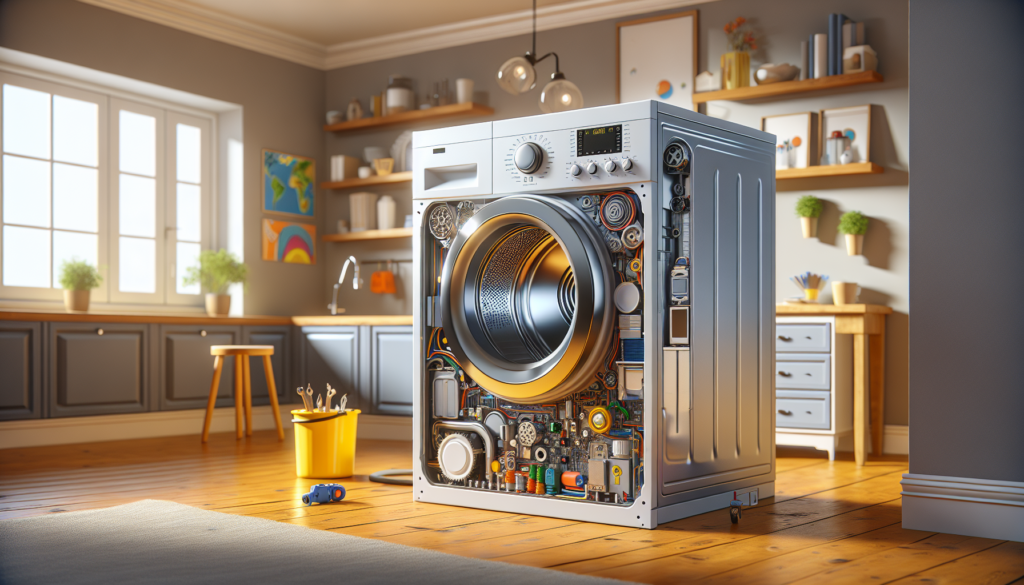
That sinking feeling when you open your dryer door expecting warm, fluffy clothes only to find a tangled mess of damp fabric is something every homeowner knows too well. A properly functioning dryer should leave your clothes completely dry within one standard cycle, yet millions of Americans deal with this frustrating issue daily, often running multiple cycles and wasting both time and energy.
When your dryer fails to properly dry clothes, the culprit is almost always related to heat generation or airflow restriction. These two systems work together to create the hot, moving air necessary for effective moisture removal. Understanding how to diagnose and fix these problems can save you hundreds in repair costs and prevent the need for a premature replacement.
Common Causes of Damp Clothes After Drying

AI Generated image · DALL-E 3
The most frequent reason clothes remain damp involves restricted airflow somewhere in the ventilation system. When hot air can’t move freely through your dryer and exhaust properly, moisture stays trapped inside the drum instead of being carried away.
Lint buildup is the primary airflow killer. Even if you clean your lint filter after every load, lint accumulates in places you can’t see: the exhaust hose, external vent cover, and internal ducts. A completely blocked vent can reduce drying efficiency by up to 80%.
Heating element failure ranks as the second most common cause. Electric dryers rely on heating elements to warm incoming air, while gas dryers use burner assemblies. When these components fail partially or completely, your dryer runs through its cycle without generating adequate heat.
Overloaded drums prevent proper air circulation even when all components work correctly. Clothes need space to tumble freely and allow hot air to reach all surfaces. Cramming too many items into one load creates dense, tangled masses that trap moisture.
Start by checking your lint filter immediately – if it’s packed solid, you’ve found your first problem to address.
Inspect and Clean Your Dryer’s Ventilation System

AI Generated image · DALL-E 3
Ventilation problems cause 90% of poor drying performance, making this your first and most critical inspection area. Begin by unplugging your dryer and pulling it away from the wall to access the exhaust hose connection.
Disconnect the exhaust hose from both the dryer and wall outlet. You’ll immediately see if lint has accumulated inside – a properly maintained hose should be nearly spotless. Remove any visible lint buildup by hand, then use a dryer vent cleaning brush or vacuum hose extension to reach deeper sections.
Check the external vent cover outside your home. The flapper should move freely when you blow air through it, and the opening should be clear of lint, debris, or bird nests. A blocked external vent creates back-pressure that prevents moisture from escaping.
Internal ductwork requires professional cleaning if your home has long vent runs or multiple turns. However, you can inspect accessible sections for obvious blockages or damage. Look for:
• Crushed or kinked flexible hoses • Loose connections allowing air leaks • Excessive lint buildup in rigid ducts • Damaged vent covers or screening
Measure your vent run length – anything over 25 feet significantly reduces airflow efficiency and requires more frequent cleaning.
Test Your Dryer’s Heating Element Function

AI Generated image · DALL-E 3
Electric dryers use heating elements that can fail partially or completely over time. A multimeter test will quickly determine if your heating element generates proper resistance values for adequate heat production.
Locate the heating element assembly, typically found behind the front or rear panel depending on your dryer model. The element consists of metal coils housed in a metal frame. Before testing, ensure the dryer is unplugged and completely cool.
Set your multimeter to measure resistance (ohms). Touch the probes to the heating element terminals – you should see a reading between 10-15 ohms for most residential dryers. No reading indicates a broken element, while extremely high readings suggest partial failure.
Gas dryers require different diagnostic approaches since they use burner assemblies instead of electric elements. Check that the gas supply valve is fully open and listen for the igniter clicking during startup. You should see flames through the viewing window within 60 seconds of cycle start.
Thermal fuses protect heating systems from overheating but can fail and cut power to heating elements even when temperatures are normal. Test thermal fuses for continuity – they should show zero resistance when functional.
Replace any failed heating components immediately, as partial failures will only worsen over time and increase energy consumption.
Check Moisture Sensor and Control Settings
Modern dryers use moisture sensors to determine when clothes are dry, but these sensors can malfunction or become coated with fabric softener residue that prevents accurate readings. The sensors appear as two metal bars or strips inside the drum, usually near the lint filter.
Clean the moisture sensors with rubbing alcohol and a soft cloth to remove any film or buildup. Even invisible residue from fabric softeners can cause sensors to give false readings, making the dryer stop prematurely while clothes remain damp.
Control panel settings significantly impact drying performance. Many homeowners unknowingly select inappropriate cycles for their load types:
• Auto-dry cycles rely on moisture sensors and may not work with small loads • Timed dry gives you more control but requires accurate time estimation • Heat settings should match fabric types – delicates need lower heat • Extended tumble options help prevent wrinkles but don’t add drying time
Mixed fabric loads confuse moisture sensors since different materials dry at different rates. Cotton items may feel dry while synthetic blends remain damp, causing the sensor to stop the cycle prematurely.
Run a test cycle with a known dry load to verify your sensors work correctly – the dryer should run briefly and shut off immediately.
Fix Airflow Problems and Blocked Exhaust
Poor airflow creates a cascade of problems that prevent effective drying. Even with proper heat generation, restricted air movement can’t carry moisture away from clothes efficiently. Address airflow issues systematically to restore optimal drying performance.
Exhaust hose problems are surprisingly common and often overlooked. The flexible hose connecting your dryer to the wall outlet should be as straight as possible with minimal bends. Sharp turns and excessive length reduce airflow significantly.
Replace crushed or kinked hoses immediately. Use only UL-listed metal or approved flexible hoses – never use plastic or vinyl ducting, which creates fire hazards and restricts airflow more than metal alternatives.
External vent maintenance requires quarterly attention in most climates. Remove the vent cover and clean out any lint, leaves, or debris. Check that the flapper door moves freely – a stuck flapper prevents proper exhaust and can cause moisture to back up into your home.
Booster fans may be necessary for homes with long vent runs exceeding 25 feet. These fans install inline with your ductwork and provide additional air movement to overcome distance and turn restrictions.
Position your dryer away from corners and walls whenever possible to improve air circulation around the unit itself.
Troubleshoot Temperature and Heating Issues
Inconsistent heating often stems from faulty temperature control components rather than complete heating element failure. Multiple thermostats and thermal switches work together to regulate dryer temperature throughout the cycle.
High-limit thermostats shut off heating when temperatures exceed safe levels, but they can fail in the closed position, preventing any heat generation. Test these components for continuity – they should show continuity at room temperature.
Cycling thermostats turn heating elements on and off to maintain proper temperatures. A failing cycling thermostat may allow temperatures to climb too high, triggering safety shutoffs, or fail to call for heat when needed.
Gas valve solenoids in gas dryers control fuel flow to the burner assembly. Failed solenoids prevent gas from reaching the igniter, resulting in no heat generation despite normal igniter operation.
Check your home’s electrical supply to electric dryers. These appliances require 240-volt service, and voltage drops can significantly reduce heating element performance. Use a multimeter to verify proper voltage at the dryer connection.
Blocked internal air paths can cause overheating that triggers safety shutoffs. Remove the top or front panel and inspect for lint accumulation around the heating element housing and internal ductwork.
Monitor your dryer’s exhaust air temperature during operation – it should feel warm but not scalding hot at the external vent.
Prevent Future Damp Clothes Problems
Preventive maintenance eliminates most damp clothes problems before they start. Establish a regular maintenance routine that addresses both obvious and hidden problem areas.
Clean your lint filter after every single load – this simple step prevents 80% of drying problems. Replace damaged or warped lint screens immediately, as they can’t trap lint effectively and allow debris to enter internal components.
Schedule annual professional vent cleaning for homes with standard vent runs, or every six months for longer installations. Professional cleaning removes lint from areas you can’t reach and identifies potential problems before they cause failures.
Avoid overloading your dryer even when you’re in a hurry. Clothes need space to tumble freely and allow hot air circulation. A good rule of thumb: fill the drum only 2/3 full for optimal drying performance.
Sort loads properly by fabric type and weight. Heavy towels mixed with lightweight shirts create uneven drying that leaves some items damp while others become over-dried.
Use appropriate heat settings for each load type. High heat damages delicate fabrics and can cause moisture sensors to give false readings.
Replace flexible exhaust hoses every five years, even if they appear undamaged. Internal lint buildup reduces efficiency over time.
Department of Energy dryer efficiency tips
Inspect external vents monthly and keep the area around them clear of landscaping, storage items, or debris that could block airflow.
Frequently Asked Questions
Q: Why do my clothes take multiple cycles to dry completely? This usually indicates restricted airflow from lint buildup in your vent system or a failing heating element that’s not generating enough heat. Check your lint filter and exhaust vent first.
Q: Should I use fabric softener if my dryer has moisture sensors? Fabric softener can coat moisture sensors and cause inaccurate readings. If you use it, clean your sensors monthly with rubbing alcohol to remove residue buildup.
Q: How long should a normal dryer cycle take? Most standard loads should dry completely in 30-45 minutes. Cycles longer than 60 minutes typically indicate ventilation problems or component failures.
Q: Can I install a longer exhaust hose to move my dryer? Exhaust hoses should be as short as possible – preferably under 8 feet with minimal bends. Longer runs require rigid metal ductwork and possibly booster fans for proper airflow.
Q: Why does my dryer get extremely hot but clothes stay damp? This suggests blocked exhaust vents preventing moisture removal despite adequate heat generation. The hot, humid air can’t escape, so clothes remain damp even at high temperatures.
Book a Repair Today
Don’t let damp clothes and multiple drying cycles continue wasting your time and energy bills. At Pros Fix Appliances, our certified technicians have the experience and tools to diagnose complex dryer problems quickly and provide lasting solutions.
We service all major dryer brands and handle everything from simple vent cleaning to complete heating system replacements. Our same-day service availability means you won’t be stuck with a malfunctioning dryer for days.
Call us today to schedule your dryer repair appointment and get back to properly dried clothes in single cycles. Your laundry routine – and your utility bills – will thank you.