Short answer: Santa Ana winds blow fine dust into kitchens and garages, and refrigerator condenser coils collect it. Dusty coils can't shed heat, so the refrigerator runs longer and cools worse. After a windy stretch, unplug it and vacuum the coils and grille with a brush attachment. If it still runs constantly, a part may have failed: usually $190–$360 in Los Angeles.
This guide is for homeowners in the Santa Clarita Valley, the foothills, the San Fernando Valley and inland Orange County, where the dry fall and winter winds hit hardest. It explains what the dust does, how to clean it out safely, and how to tell when the problem has gone past cleaning.
Why do Santa Ana winds affect a refrigerator?
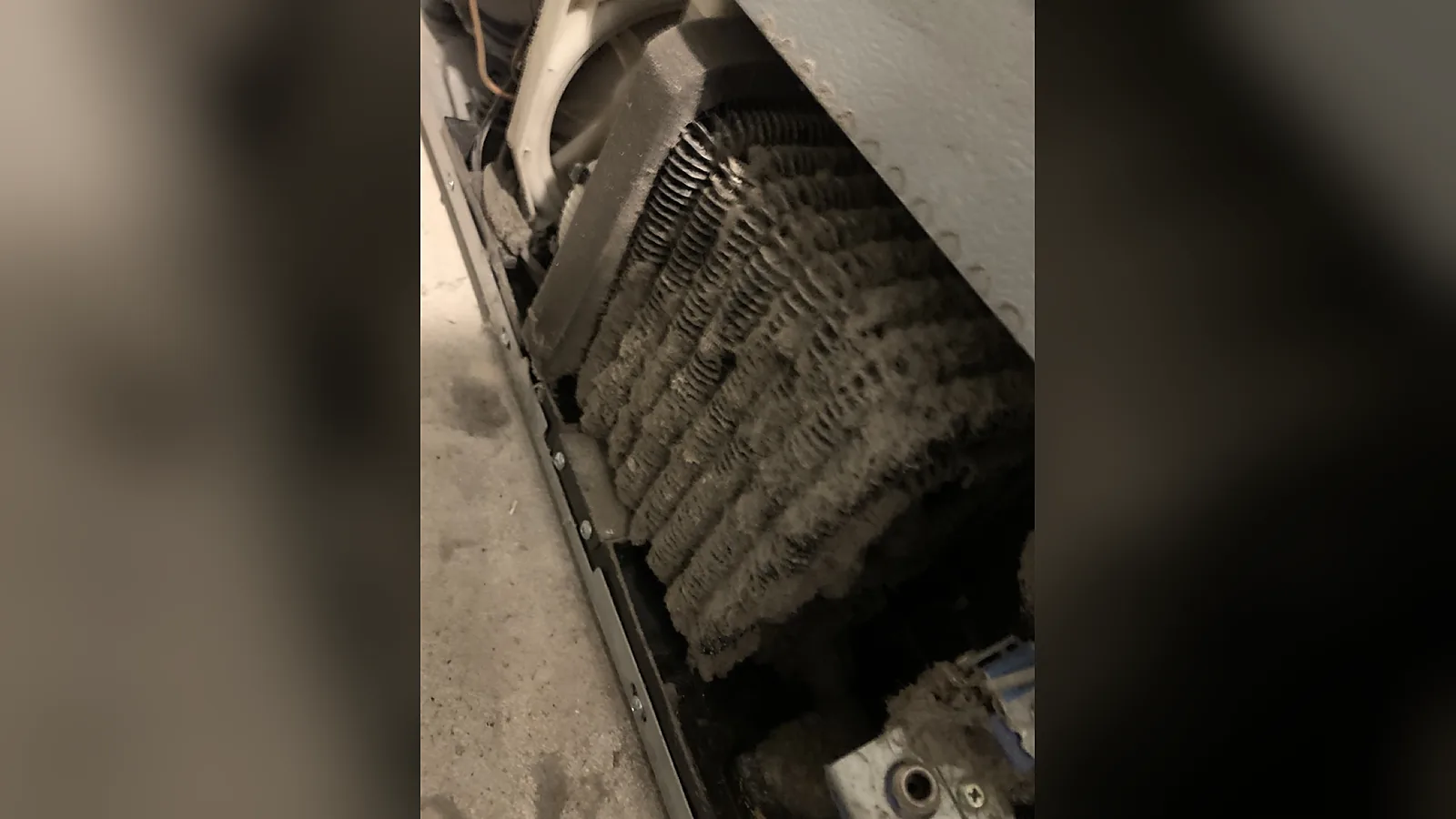
A refrigerator moves heat from inside the box to the room through its condenser coil, usually a grid of tubing underneath or at the back, with a small fan pulling room air across it. That fan pulls in whatever is in the air. During Santa Ana conditions, the dry offshore winds of fall and winter, that means fine dust, ash in a fire year, and pet hair stirred up from everywhere.
A coated coil sheds heat poorly, so the compressor runs longer and hotter to do the same job. The refrigerator still works at first; it just works harder. Over a season, that extra heat and run time is what wears out fan motors and compressors early.
How do you know the coils need cleaning?
- The refrigerator seems to run all the time, or noticeably more than it did a month ago.
- The sides of the cabinet or the floor in front of the grille feel warmer than usual.
- A louder hum or a whirring from the bottom.
- Food is a little less cold at the same setting, or ice production slows.
- You can see a gray mat through the bottom grille with a flashlight.
If the windows were open, the house sits near a construction site or an unpaved lot, or you have pets, assume the coil is loaded after any long wind event.
How do you clean refrigerator condenser coils safely?
It takes about 15 minutes, a vacuum with a brush attachment and, ideally, a long coil brush from a hardware store.
- Unplug the refrigerator, or switch off its breaker if you can't reach the plug.
- Find the coil. On most current models it's behind the grille at the bottom front, which pulls or snaps off. On others it's behind a panel at the bottom rear; roll the refrigerator out carefully, minding the water line.
- Vacuum the grille and the front of the coil with the brush attachment.
- Loosen what's deeper in with the coil brush, working gently between the tubes, and vacuum again. Don't bend the fins or tubing.
- Vacuum the floor underneath and around the condenser fan if you can see it. Don't spray water or cleaners into the compartment.
- Refit the grille, plug it in and push the refrigerator back without kinking the water line.
Once or twice a year is enough for most homes. In wind-prone areas, add a cleaning after the season's first big wind event. The rest of the routine, gaskets, temperatures and filters, is in our 20-minute refrigerator maintenance checklist.
What about garage and built-in refrigerators?
Garage refrigerators get the worst of it: the garage door opens straight onto the wind, and the floor is where the dust settles. Clean a garage refrigerator's coil after every major wind event, and keep boxes and bags away from its sides so air can move.
Built-in refrigerators have the condenser behind a grille at the top or bottom, and many have a warning light that comes on when the unit is running hot. The method is similar, but access differs by model; our guide to Sub-Zero condenser cleaning covers it, and our Sub-Zero repair page lists what we service on those units.
Which other appliances does the wind affect?
- Dryers. Check the vent hood outside. Wind can pack debris into the flap or jam it, and a flap that doesn't open makes the dryer run long and hot.
- Range hoods. A hood that vents outside can take dust back in when it's off. Wash the metal filters after the wind passes.
- Freezers and wine coolers. They have condenser coils too, often at floor level, and the same cleaning applies.
When is cleaning not enough?
Give the refrigerator a day after cleaning. If it still runs nonstop, feels warm inside, or makes a new noise, something has failed, often the condenser fan motor.
| What you notice after cleaning | Likely cause | Typical LA price |
|---|---|---|
| No airflow at the bottom grille; compressor area hot | Condenser fan motor | $190–$340 |
| Frost on the freezer's back wall; fresh-food side warm | Defrost failure | $190–$360 |
| Clicking every few minutes; refrigerator warming | Start relay | $160–$280 |
| Runs nonstop and can't get cold with clean coils and working fans | Weak compressor or refrigerant leak | $650–$1,400 |
Our guide to a refrigerator running constantly goes through each cause. The refrigerator diagnostic is $85 and is applied to the repair you approve, with no travel charge. Call (866) 696-7767 or book online; calls placed before noon are usually seen the same day, including the Santa Clarita Valley: Valencia, Saugus, Newhall, Canyon Country and Stevenson Ranch. More on our refrigerator repair page.
Frequently asked questions
How often should I clean refrigerator coils in a dusty area?
Once or twice a year is enough for most homes. In wind-prone areas such as the Santa Clarita Valley and the foothills, add a cleaning after the first major wind event of the season, and clean a garage refrigerator's coil after every big one. Homes with pets need it more often too.
Can dusty coils make a refrigerator stop cooling?
Yes, eventually. A coated coil can't release heat, so the compressor runs hotter and longer, cooling weakens, and parts such as the condenser fan motor fail early. Cleaning the coil often restores normal cooling. If it doesn't within a day, a part has likely failed.
Is it safe to clean refrigerator coils myself?
Yes, if you unplug the refrigerator first and use only a vacuum and a soft coil brush. Don't spray water or cleaners into the compartment, don't bend the tubing or fins, and take care not to kink the water line when you move the refrigerator.
Why is my garage refrigerator running all the time after the winds?
Garage refrigerators take in the most dust, and the coil sits near the floor where it settles. Unplug it and vacuum the coil and grille. If it still runs constantly a day later, have the condenser fan and the cooling system checked.
What's your refrigerator doing?
Fridge running nonstop after the winds? Call before noon and we can usually be there today.
- Diagnostic
- $85applied to the repair
- Same-day
- Call before noonMost LA, OC & Ventura calls seen today
- Warranty
- 30–90 daysparts and labor