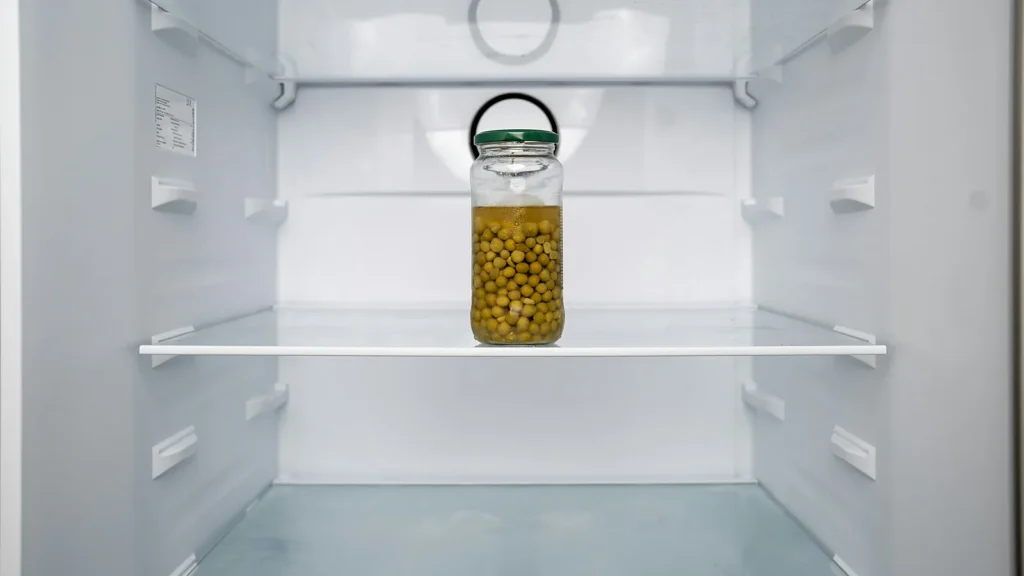
Short answer: Refrigerator maintenance takes about 20 minutes: unplug the refrigerator and vacuum the condenser coils at least once a year, test the door gaskets with a dollar bill, confirm 37°F and 0°F with a thermometer, and replace the water filter on schedule. In Los Angeles, garage refrigerators and homes with pets need coil cleaning every six months.
This checklist is for Los Angeles homeowners and renters who want a refrigerator to reach its full 10–12 years. You need a vacuum with a brush attachment, a flashlight, a dollar bill and an appliance thermometer; nothing here involves wiring or sealed panels.
What’s on a refrigerator maintenance checklist?
The checklist has seven tasks, most of them five minutes each. Do the full list in spring, before the heat, and repeat the quick checks in fall, when Santa Ana winds kick up dust. Homes near the ocean have extra steps, covered in our guide to salt air and refrigerators.
| Task | How often | Why it matters |
|---|---|---|
| Vacuum the condenser coils | Once a year; every 6 months with pets, in a garage or near the coast | Dust makes the compressor run longer and hotter |
| Test the door gaskets | Spring and fall | A leaking seal lets in warm, humid air |
| Check temperatures | Monthly and in heat waves | The control setting isn’t the real temperature |
| Replace the water filter | At the interval on the filter | An old filter slows the dispenser and ice maker |
| Wash the ice bin | Every 3–4 months | Clumped ice jams the dispenser |
| Check the defrost drain and pan | Once a year | A clogged drain leaves water under the crisper drawers |
| Check level and clearance | Once, and after any move | Doors that don’t swing shut leak cold air |
How do you clean refrigerator coils?
Clean refrigerator coils by unplugging the refrigerator and vacuuming the condenser coil, with no water and no chemicals. The condenser coil is where the refrigerator releases the heat it pulls out of your food; when dust coats it, the compressor works longer and hotter.
- Unplug the refrigerator or switch off its breaker. The condenser fan can start on its own.
- Find the coil. On most freestanding models it’s at the bottom, behind the toe grille or a rear panel; older models have it on the back. Ease the refrigerator out without stretching the water line if you need the rear.
- Vacuum along the fins with a soft brush attachment, then use a long coil brush for the rest; ENERGY STAR notes these brushes are sold at most hardware stores.
- Don’t bend the fins, spray water or use coil-cleaner chemicals.
- Dust the fan blade and plug the refrigerator back in.
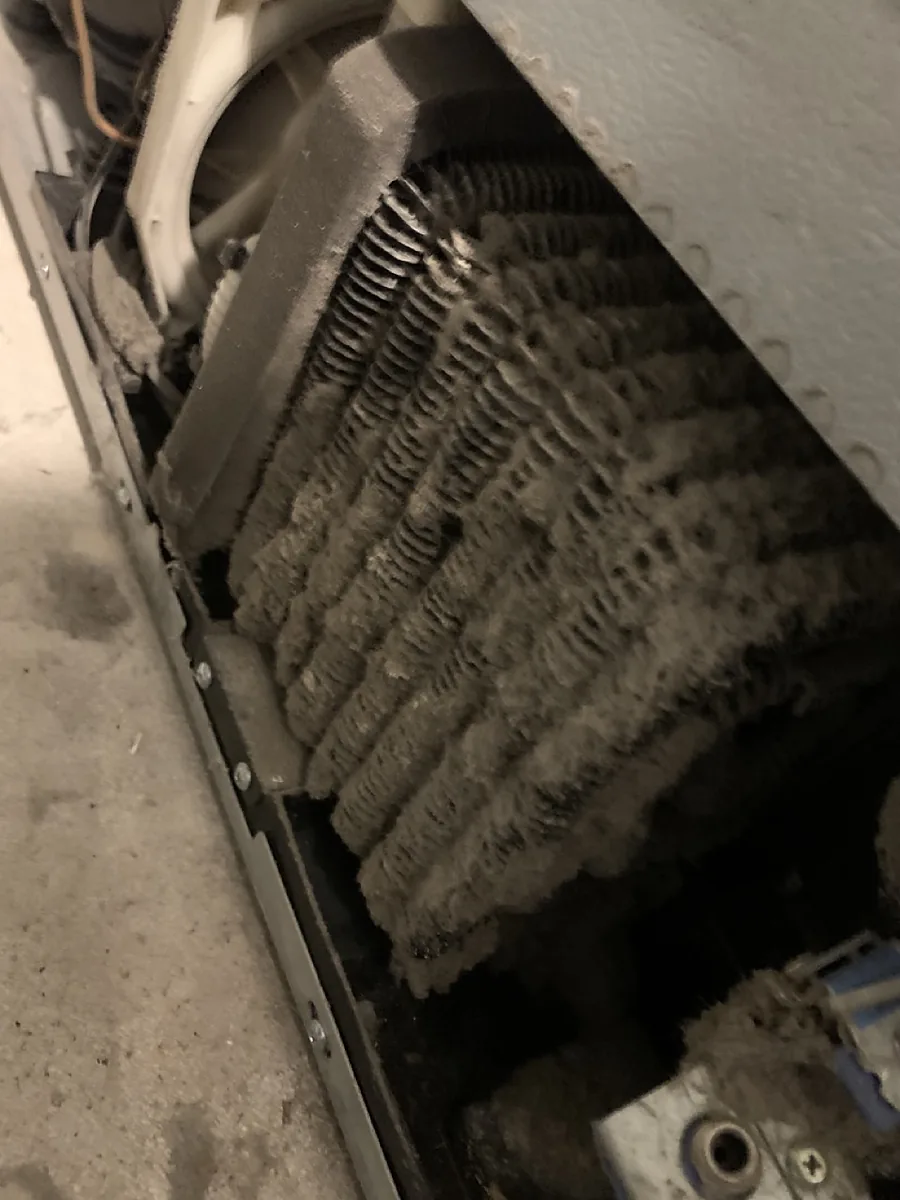
In the photo every fin is felted over, so the fan moves almost no air; a coil like that is a common reason a refrigerator runs constantly. Sub-Zero owners can follow our Sub-Zero condenser cleaning steps.
The dollar-bill test for door gaskets
To test a refrigerator door gasket, close the door on a dollar bill at several points around the seal and pull it out. You should feel drag every time; if the bill slides out freely anywhere, that section isn’t sealing.
Test all four sides, including the hinge side and corners, and look for tears, flat spots and mildew. Wash the gasket with warm, soapy water and dry it; a sticky gasket can tear. A flat spot may only need the door adjusted, while a tear means a new gasket. ENERGY STAR’s rule: airtight seals, or replace them.
What temperature should a refrigerator be?
A refrigerator should be set to about 37°F in the fresh-food section and 0°F in the freezer. ENERGY STAR recommends 35–38°F for the refrigerator, and the FDA says to keep it at 40°F or below, with the freezer at 0°F.
Don’t trust the dial alone: the FDA notes that few refrigerator controls show actual temperatures, so keep an appliance thermometer in each compartment. If the fresh-food section reads above 40°F with clean coils and good gaskets, that’s a repair, not a setting.
How often should you change the water filter?
Change a refrigerator water filter at the interval printed on the cartridge or in your manual, or when the filter light comes on, whichever comes first. Intervals vary by brand: Sub-Zero rates its current filter for up to 12 months or 750 gallons and says to replace it sooner if water pressure drops or ice cubes come out hollow.
After a new filter goes in, run several glasses of water through the dispenser to clear the air. If it’s still slow with a fresh filter, suspect water pressure, a kinked line or the inlet valve.
Drain pan, ice bin and leveling
- Defrost drain and pan. A frost-free refrigerator melts frost off its evaporator coil and drains the water to a pan near the compressor, where it evaporates. Water under the crisper drawers or ice on the freezer floor usually means a clogged drain.
- Ice bin. Wash it every few months and break up clumps. If ice stops, check that the shutoff arm or switch hasn’t been bumped off.
- Leveling and clearance. Level side to side so the doors seal; many models sit slightly higher in front so the doors swing shut. ENERGY STAR also advises a few inches of space behind the refrigerator, away from the oven, dishwasher and direct sun.
Garage refrigerators and LA heat
A garage refrigerator in the San Fernando Valley or inland Orange County works far harder in summer, because it has to push heat into air that can top 100°F. A dusty coil or weak condenser fan that a kitchen unit would shrug off means warm food in a garage.
- Clean a garage unit’s coil every six months and keep boxes away from the grille.
- Check the manual’s installation section for the room temperatures the model is designed for; not every refrigerator is meant for an unconditioned garage.
- If it’s an old second refrigerator, ENERGY STAR’s current guidance (checked November 2026) says an old refrigerator uses about 20% more energy than an ENERGY STAR model, and it recommends replacing an old second refrigerator you need year-round.
When maintenance isn’t enough
Call a technician when maintenance doesn’t fix the symptom: the fresh-food section stays above 40°F with clean coils and good gaskets, frost covers the freezer’s back wall, water keeps pooling under the crisper drawers, or the refrigerator clicks but won’t start. Unplug it right away if you smell burning or see scorch marks.
Calls placed before noon are usually seen the same day across Los Angeles County and Orange County; later calls are typically next business day. The refrigerator diagnostic is $85, applied to the repair you approve, and if a repair costs more than half the price of a comparable new refrigerator, we’ll tell you. Call (866) 696-7767, book online, or see our refrigerator repair page.
Frequently asked questions
How often should refrigerator coils be cleaned?
At least once a year, ideally in spring before the heat, and every six months for a garage refrigerator, a home with shedding pets or a home near the coast. Sub-Zero tells owners of its built-ins to clean the condenser every 6–12 months, more often with pets. Unplug the refrigerator first and vacuum with a soft brush.
Can I clean refrigerator coils with a hose or a coil cleaner spray?
No. Water can reach the condenser fan motor and wiring, and chemical sprays aren’t needed; Sub-Zero specifically doesn’t recommend them for its condensers. Unplug the refrigerator, vacuum along the fins with a soft brush, and use a long coil brush for the parts you can’t reach.
Is it OK to keep a refrigerator in a hot garage?
Only if the manual says the model is designed for the temperatures your garage reaches. Valley and inland garages get far hotter than a kitchen in summer, so the compressor runs much longer. If you keep one there, clean its coils every six months and leave space around it for air.