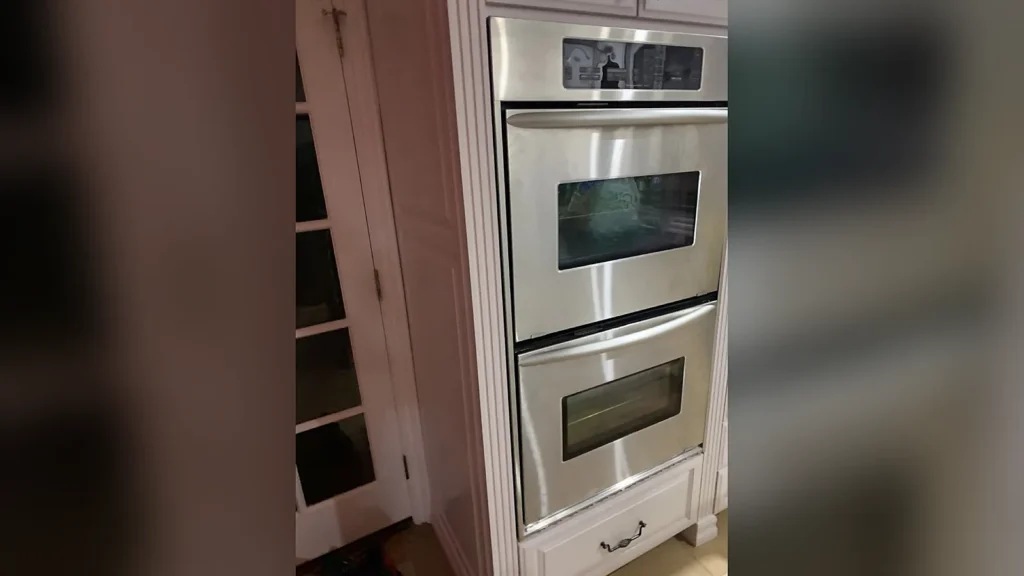
Short answer: Senior living kitchen appliance safety starts with five features: an induction cooktop or an automatic shutoff for the range, front controls so no one reaches over burners, a wall oven at counter height or a microwave drawer, side-swing oven doors and refrigerator door alarms. Back them with a written maintenance schedule and a vendor who usually dispatches the same day.
This guide is for directors, maintenance teams and families choosing or maintaining kitchen appliances in senior living apartments across Los Angeles and Orange County: the safer features, a maintenance schedule and how to handle work orders.
Which kitchen appliance features make senior living safer?
The kitchen appliance features that matter most in senior living remove an open flame, a reach over a hot burner or a heavy lift from a low oven:
| Feature | Risk it lowers | What to check | Typical LA repair |
|---|---|---|---|
| Induction cooktop | Burns from flame or glowing elements | Magnetic cookware; residual-heat indicators | Induction power module $450–$900 |
| Automatic shutoff | A burner or oven left on | The oven’s built-in shutoff time (in the manual) or an add-on shutoff device | Oven relay or control board $280–$650 |
| Front controls with a control lock | Reaching across hot burners | Controls on the front edge; a lock against accidental use | Element or infinite switch $150–$290 |
| Wall oven at counter height | Bending and lifting hot pans | Rack height near the counter; side-swing door if available | Bake or broil element $180–$340 |
| Microwave drawer | Lifting hot food down from an over-the-range microwave | Drawer opens at or just below counter height | Drawer microwave service $220–$560 |
| Refrigerator door alarm | Food spoiling behind a door left open | Alarm works, door seals, 40°F and 0°F inside | Door gasket $160–$300 |
Habits matter as much as features. The U.S. Fire Administration calls cooking the leading cause of home fires and home fire injuries, and its first tip is to stand by your pan: if you leave the kitchen, turn the burner off. Shutoff features are a backstop for the times that doesn’t happen.
Is induction safer than gas or electric for seniors?
For most residents, an induction cooktop is a lower-risk choice than gas or an electric coil, because it has no flame or glowing element and heats a zone only when a magnetic pan sits on it. Lift the pan and the zone stops heating.
There are three caveats. Cookware must be magnetic: if a fridge magnet sticks to the bottom of a pan, the pan works. The glass still gets hot from the pan, so residual-heat lights matter. And induction manuals typically tell people with pacemakers or other implanted medical devices to check with their doctor, so read the manual for the model you choose. If a zone stops recognizing pans, our guide to induction cooktops not detecting a pan covers the causes.
Ovens and microwaves at counter height
A wall oven at counter height, like the double wall oven pictured at the top of this page, lets a resident slide a hot pan out level instead of bending to a low oven and lifting it. Some wall ovens also come with side-swing doors that open like a cabinet door, so nobody leans over a hot drop-down door.
Microwaves work the same way. An over-the-range microwave puts hot liquids over the burners and, for many residents, above shoulder height, while a microwave drawer opens at or just below counter height. For freestanding ranges that stay, choose front controls and confirm the anti-tip bracket at every apartment turnover; our apartment turnover appliance checklist lists the other checks.
How often should senior living kitchen appliances be maintained?
Senior living kitchen appliances should be checked at every apartment turnover and on a yearly schedule, with anything a resident reports handled as a work order the same week.
- Every turnover: test every appliance running, confirm the range’s anti-tip bracket, and check that the refrigerator holds 40°F or below and the freezer 0°F, the FoodSafety.gov targets.
- Every year: have gas appliances inspected, as SoCalGas advises; clean refrigerator condenser coils; check door gaskets, door alarms and oven shutoff settings.
- On a regular schedule: clean range hood grease filters, more often in apartments where residents cook daily.
- When a resident’s needs change: review the kitchen, adding a shutoff device or replacing a gas range with induction.
Replacing a working range with induction for a resident’s safety is an upgrade, not a repair decision. For failed appliances, our rule is to repair when the quote is under half the price of a comparable new unit and it has life left: about 15 years for ranges and 10–12 for refrigerators and dishwashers.
How should a senior living community handle appliance work orders?
A senior living community should route appliance work orders through one vendor with the paperwork already on file, and tell residents when a technician is coming. Pros Fix Appliances works with senior living communities in Calabasas and across Los Angeles and Orange County this way:
- Work orders through AppFolio, Yardi, RealPage, Buildium or Entrata, with same-day dispatch for orders received before noon and an after-hours line for refrigeration failures and leaks.
- A certificate of insurance naming the community as additional insured, a W-9, BHGS registration A49955 and a technician list for front-desk access.
- Photos of the fault and the repair on every ticket, and Net-30 billing by unit, purchase order or work order.
On the community side, tell residents and families the visit window in advance; an unexpected knock can be unsettling.
When to call a technician
Call a technician right away for a burner or element that won’t turn off or heats on its own, sparks, a leak, or a refrigerator above 40°F. For a gas smell, get the resident out first and call SoCalGas at 1-800-427-2200 or 911 from outside. Our guide to an electric burner stuck on high explains that fault.
Calls placed before noon are usually seen the same day across Los Angeles County and Orange County; later calls are typically seen the next business day. The diagnostic is $69 for cooking appliances, $85 for refrigeration and $120 for commercial kitchen equipment in a central dining room, applied to the repair, the same in both counties with no travel charge. Call (866) 696-7767, book online or set up a vendor account through our contact page. Our oven repair page lists typical oven and range prices.
Frequently asked questions
Are induction cooktops safe for seniors?
Induction removes two common burn sources: there’s no flame or glowing element, and a zone heats only when a magnetic pan sits on it. The glass still gets hot from the pan, cookware must be magnetic, and induction manuals typically tell people with pacemakers to check with their doctor first.
What is an automatic stove shutoff device?
An add-on stove shutoff device cuts power or gas to a range after a set time, or when it senses no one has been in the kitchen, depending on the model. Installation varies by device and by electric or gas range, so follow the maker’s instructions and local code.
Do seniors get a discount on appliance repair?
Yes. Pros Fix Appliances takes 10% off the repair for seniors and veterans; mention it when you book. Communities with a vendor account are billed Net-30 by unit, purchase order or work order, with a monthly statement per property.