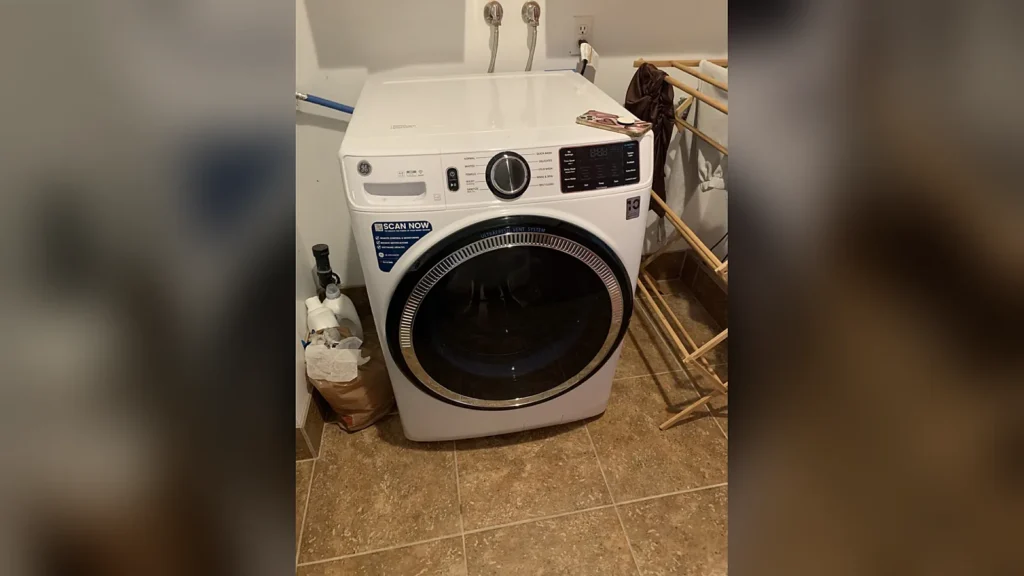
Short answer: A washer won’t fill with water most often because a supply valve is closed or a hose is kinked, the inlet screens are clogged with sediment, the water inlet valve has failed, or the lid or door lock isn’t engaging. Check the valves, hoses and screens first. An inlet valve repair runs $170–$300 in Los Angeles.
This guide is for anyone whose washer starts a cycle and then nothing happens, or the water only trickles in. It covers the free checks first, then the parts that fail, with typical Los Angeles repair prices and the point where it’s time to call.
Why won’t my washer fill with water?
Water travels from the wall valves through the hoses and inlet screens, past the inlet valve and into the tub, and the washer must decide it’s safe to fill. A fault anywhere on that path stops the fill, and most are at the start of it.
| What you notice | Likely cause | First step | Typical LA price |
|---|---|---|---|
| No water at all, washer otherwise runs or hums | Wall valves closed, or the house water was shut off | Open both valves fully (counterclockwise); test a nearby faucet | Free |
| Slow fill or a trickle | Kinked hose or clogged inlet screens | Straighten the hoses; clean the screens | Free |
| Hums or clicks with no water, valves open and screens clean | Failed water inlet valve (the coil or the valve itself) | Technician test of each coil | Inlet valve $170–$300 |
| Only hot or only cold comes in | One valve closed, swapped hoses, a clogged screen on that side, or one bad coil | Check that side’s valve, hose and screen | Free, or inlet valve $170–$300 |
| Seems to fill forever, or the level keeps dropping | Drain hose too low, sitting in water, or pushed too far into the pipe, so water siphons out | Reset the drain hose height and depth | Free |
| Stops before filling; lock light blinks or a door code shows | Lid or door lock not engaging (many washers lock before filling) | Clear the latch, close firmly, reset | Lid or door lock $160–$300 |
| Overfills, underfills or shows a pressure code | Water-level sensor (pressure switch) or its hose | Technician check | Priced after diagnosis |
Many washers also show a code when the water doesn’t arrive in time. LG, for example, uses IE, a water inlet error, when the tub doesn’t reach its level within a set period.
What can you check yourself?
Most no-fill problems are solved before any panel comes off. Turn the washer off and unplug it before you disconnect a hose, and keep a towel and a bucket handy.
- Open both valves fully. Turn the hot and cold valves behind the washer counterclockwise until they stop. After plumbing work or a building water shutoff, they’re sometimes left closed or half open. They’re the two handles above the washer in this post’s photo.
- Check the house water. Run the nearest sink. If it’s weak or off too, the washer isn’t the problem.
- Straighten the hoses. Pull the washer forward gently and make sure neither hose is kinked or crushed against the wall.
- Clean the inlet screens. Shut both valves, unscrew each hose at the back of the washer, and find the small mesh screen inside the washer’s inlet. LG’s steps say to pull it out with pliers and scrub it with a toothbrush. Rinse it, refit it and reconnect the hoses snugly.
- Flush the hoses. With the hoses off the washer and pointed into a bucket, open each valve briefly to clear dirt.
- Check the drain hose. It should hook into the drain pipe or sit in its holder, not lie on the floor or sit in water; a hose set too low can siphon water out as fast as it comes in.
- Check the lid or door. Remove anything caught in the latch and close it firmly; listen for the lock click.
- Reset and retest. Plug the washer back in, open the valves and start a rinse cycle.
Sediment and pipe scale can turn up in the screens after plumbing work or a water shutoff. LG’s owner’s manual for one front-loader also warns that “leak-limiting” hoses can trip falsely and keep a washer from filling, so try standard hoses if yours are that type.
Stop if water leaks from the valve stem or a hose fitting won’t seal, if a valve won’t turn (old valves can snap), or if you see water near the outlet. Keep the washer unplugged until the area is dry.
Which parts fail when a washer won’t fill with water?
If the water supply is good and the screens are clean, the fault is inside the washer: the inlet valve, the lock or the water-level control. These need testing with a meter.
The water inlet valve
The water inlet valve is an electric valve at the back of the washer that opens when the control sends it power. It usually has one coil for hot and one for cold. A coil that has failed, or a valve jammed with grit, gives you a hum with no water, or water on one side only. It’s replaced as one part, typically $170–$300 in Los Angeles.
The lid lock or door lock
Front-loaders lock the door at the start of the cycle, and many newer top-loaders lock the lid before they fill. On those washers, if the lock can’t confirm it’s closed, the washer won’t add water. A lid or door lock replacement runs $160–$300.
The water-level sensor and the control
The water-level sensor, sometimes called the pressure switch, measures how full the tub is. If it reads “full” when the tub is empty, the washer never fills. Less often, the main control board stops sending power to the inlet valve; a board runs $280–$560. The technician tests the valve, the sensor and the board output before quoting either.
When should you call a technician?
Call when both valves are open, the house water is fine, the screens are clean and the washer still won’t fill. Call right away if water appears where it shouldn’t, or the washer fills and won’t stop; turn off the water valves first.
Calls placed before noon are usually seen the same day across Los Angeles County and Orange County. The washer diagnostic is $69, applied to the repair you approve, with the same fees in both counties and no travel charge. Inlet valve and lock repairs pass the 50% rule on most washers (repair when the quote is under half the price of a comparable new washer and the washer has life left); replacement makes sense mainly when a no-fill fault arrives on an old washer that also has a bigger problem, such as worn bearings. Have the model number ready and call (866) 696-7767 or book online. Related: what LG’s IE and other codes mean, why a washer won’t spin, and our washer repair service.
Frequently asked questions
Why does my washer fill so slowly?
Slow filling usually means partly clogged inlet screens, a kinked hose, a valve not fully open, or low house water pressure. Whirlpool’s front-load installation instructions call for 20–100 psi. Check another faucet; if the house pressure is fine and the screens are clean, a weak inlet valve is likely.
Why does my washer hum but no water comes in?
A hum with no water usually means the inlet valve’s coil is energized but the valve can’t open, because of a clog, low pressure or a failed valve. Turn off the power and water, then check the screens. If they’re clean and both valves are open, the inlet valve needs replacing, $170–$300 in Los Angeles.
My washer fills with only hot or only cold water. Why?
Check that both wall valves are open and that the hot and cold hoses aren’t swapped or kinked. If one side still won’t flow, the screen on that side may be clogged or one coil of the inlet valve has failed. A technician tests each coil and the valve is replaced as one part.
Can I replace a washer inlet valve myself?
Some owners do, but it means opening the cabinet near the wiring, disconnecting the hoses and working with the water and power off. If you’re not comfortable with that, it’s a quick repair for a technician: $170–$300 in Los Angeles, including a test for leaks and a full fill before we leave.