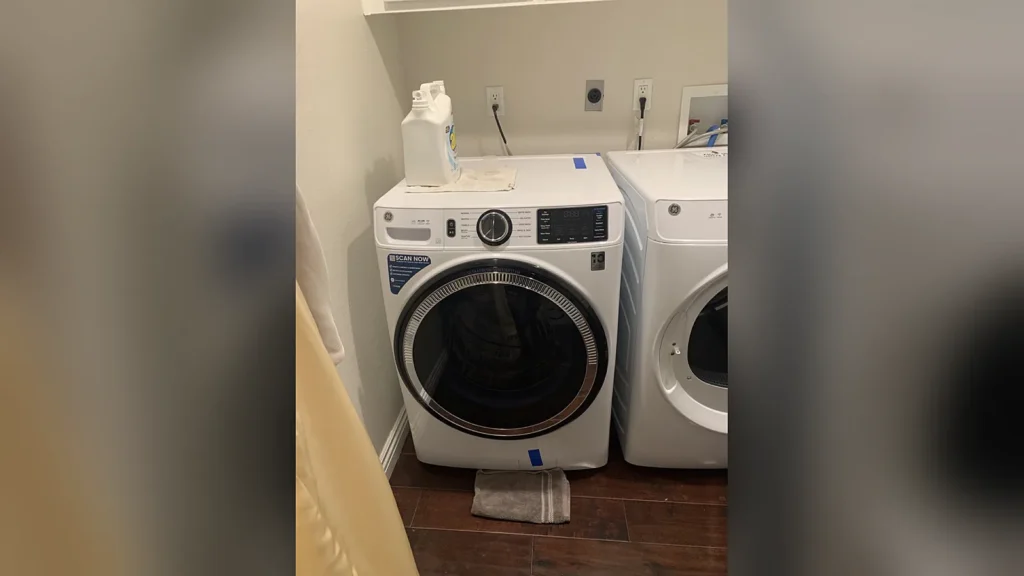
Short answer: A washer shaking violently on spin is usually caused by an unbalanced load, a washer that isn’t level, shipping bolts left in after installation, or worn shocks or suspension rods. Rebalance the load, check that all four feet are firm and locked, and look for the bolts. A suspension repair runs $220–$380 in Los Angeles.
This guide is for anyone whose washer bangs, rocks or walks across the floor during spin, in a house, a garage or a condo laundry closet. It covers the free checks first, then the parts that wear out, with typical Los Angeles repair prices and when it’s time to call.
Why is my washer shaking violently?
A washer shaking violently usually has a load problem, a leveling problem or leftover shipping bolts, and those three are free to fix. Worn shocks, suspension rods and bearings come next. The table shows how to tell them apart.
| What you notice | Likely cause | First step | Typical LA price |
|---|---|---|---|
| Bangs and walks mostly with bedding, towels or one heavy item | Unbalanced load | Stop, spread the load, add or remove items | Free |
| Rocks when you push its corners diagonally | Not level, or a foot is loose | Adjust the feet and tighten the lock nuts | Free |
| Violent from the very first spin of a new or moved washer | Shipping bolts or transport brackets still in | Check the back panel; remove them | Free |
| Front-loader bounces or knocks even with a balanced load | Worn shock absorbers or dampers | Technician check | Shocks or suspension set $220–$380 |
| Top-loader tub hangs low or bangs the cabinet | Worn or broken suspension rods | Technician check | Suspension rods (set) $220–$380 |
| Roar or grinding along with the shaking; drum feels loose | Worn tub bearings | Technician check | Tub bearing and seal $450–$750 |
| Whole floor flexes, or the washer slides on tile | Springy floor, or a slippery surface | Anti-slip pads for slick floors; a flexing floor needs a contractor | Not an appliance repair |
Modern washers spin fast, so a few pounds of wet laundry on one side of the drum pulls hard on the whole cabinet. Most washers sense an unbalanced load and slow down, but they can’t correct a washer that isn’t level or a tub that the shipping bolts still hold rigid.
What can you check yourself?
These checks need a wrench and, ideally, a small level. Unplug the washer before you move it or reach behind it, and get help pulling it out; a washer is heavy and can tear its hoses if dragged.
- Rebalance the load. Pause the cycle and wait until the door or lid can be opened. Spread the laundry evenly, untangle sheets, and wash one bulky item with a few towels. LG recommends filling a front-loader to about two-thirds of the drum.
- Look for shipping bolts. On a washer that was just installed or moved, check the back panel for bolts or plastic spacers. LG’s vibration guide says that if you open the door and the tub won’t move, the bolts are still in. Remove all of them with a wrench, cap the holes, and keep the bolts for any future move.
- Rock the corners. Press down on diagonal corners, front-left to back-right and front-right to back-left. Any rocking means a foot isn’t touching the floor.
- Level the washer. Set a level on the top, side to side and front to back. Turn the front feet until all four sit firmly, then tighten each lock nut up against the cabinet so the foot can’t creep. Some models have self-adjusting rear feet; your installation guide shows how to set them.
- Check the floor. The washer needs a solid, nearly level floor. Whirlpool’s installation instructions, for example, allow no more than a 1-inch slope under the washer, call for a floor that holds the washer full of water and laundry (315 pounds for the models they cover), and rule out carpet.
- Test with a light load. Run Rinse and Spin with a few towels and watch.
Don’t level a washer with folded towels or wood scraps; they compress and slide. Stop and call if you see the tub hanging low or rubbing the cabinet, hear grinding, or see water under the washer.
When is it the shocks, rods or bearings?
If the load is balanced, the washer is level and the bolts are out, the suspension is the next suspect. These parts wear slowly, so the shaking tends to build over months.
Shock absorbers and dampers (front-loaders)
Most front-loaders hang the tub on springs and slow its movement with shock absorbers, also called dampers, underneath. Worn shocks let the tub bounce and knock the cabinet, especially as spin starts. A set replacement runs $220–$380 in Los Angeles.
Suspension rods (top-loaders)
Many top-loaders hang the tub from suspension rods at the corners, usually four. When one wears or breaks, the tub sits off-center or low on one side, and the washer bangs or stops with an unbalance code even with small loads. A set of rods also runs $220–$380.
Tub bearings
Worn tub bearings let the drum wobble, and the shaking comes with a roar that rises with spin speed. That repair is $450–$750, and on a mainstream washer past about 8 years, replacing the washer usually makes more sense.
What about stacked washer-dryers?
A stacked unit puts a dryer on top of a shaking washer, so leveling matters even more. The washer must be level and firm on all four feet before the dryer goes on, and the stacking kit should lock the two together. In condo laundry closets the washer is often pushed tight against the back wall. Leave room so the hoses aren’t crushed and the tub can move without the cabinet hitting anything; LG asks for at least 4 inches between the back of its washers and the wall.
When should you call a technician?
Call when the shaking continues after the load, leveling and bolt checks, when the tub hangs crooked, or when you hear grinding. Stop the washer right away if it has moved far enough to strain its hoses or power cord.
Calls placed before noon are usually seen the same day across Los Angeles County and Orange County. The washer diagnostic is $69, applied to the repair you approve, with the same fees in both counties and no travel charge. Suspension repairs pass the 50% rule on most washers; bearings on an older washer often don’t, and we’ll say so. Call (866) 696-7767 or book online. If the shaking comes with a grinding sound, read what a washer grinding noise means; for stacked units in condos, see stacked washer-dryer repair. Our washer repair page lists every washer price.
Frequently asked questions
Why did my new washer start shaking right after installation?
Check for shipping bolts first. Front-loaders ship with bolts through the back panel that hold the tub still; LG’s manual for one model lists four. Left in, they cause severe vibration and noise and can damage the washer. Then check that the washer is level and all four feet sit firmly on the floor.
Can a shaking washer damage the floor or the washer?
Yes. A washer that walks can pull its hoses loose, dent cabinets or a dryer beside it, and wear the suspension and bearings faster. On a stacked unit it also strains the stacking kit. Stop the cycle, redistribute the load, and don’t run it again until the cause is found.
Do anti-vibration pads stop a washer from shaking?
They can help on a hard, slippery floor, but they don’t fix a washer that is out of level, has shipping bolts in, or has worn shocks. Fix the cause first. Pads also add height, so re-level the washer after fitting them and check that the feet’s lock nuts are tight.
How much does it cost to fix a shaking washer in Los Angeles?
Often nothing, because leveling, rebalancing and removing shipping bolts are free. Shocks or suspension rods run $220–$380 as a set, and a tub bearing and seal repair runs $450–$750. The $69 diagnostic is applied to the repair you approve, with the price in writing first.