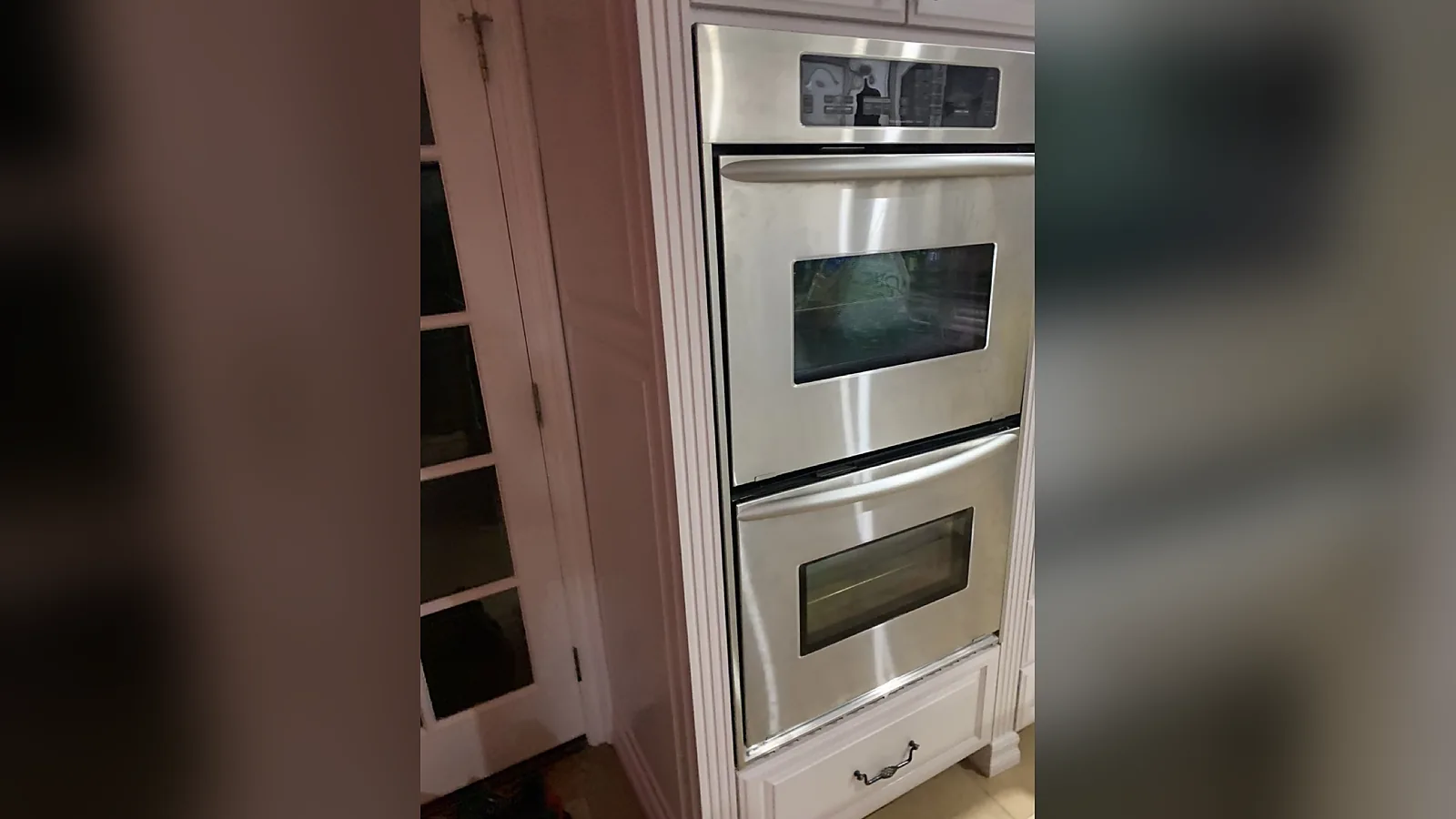
Short answer: Run an oven check before Thanksgiving this week: preheat to 350°F and time it, compare the display with an oven thermometer after 20 minutes, watch the igniter or elements, test the broiler and close the door on a sheet of paper. If anything is off, most fixes cost $160–$340 in Los Angeles, and parts take time to arrive.
This guide is for anyone cooking the big meal at home in Los Angeles, Orange or Ventura county. The test takes about ten minutes of your attention, costs nothing, and tells you while there's still time to fix it whether the oven will hold temperature for four hours with a full house waiting.
What is the 10-minute oven check?
Seven quick tests, done with an empty oven and a $10 oven thermometer from any grocery or hardware store. Write down what you see; it's exactly what a technician will ask.
- Time the preheat. Set Bake to 350°F and start a timer. Note how long the oven takes to signal it's ready. A preheat that has become much slower than it used to be is the earliest sign of a weak igniter or a failed element.
- Check the real temperature. Hang the thermometer on the middle rack. After 20 minutes at 350°F, read it through the window without opening the door. A reading within about 25 degrees is normal, because every oven swings above and below its set point.
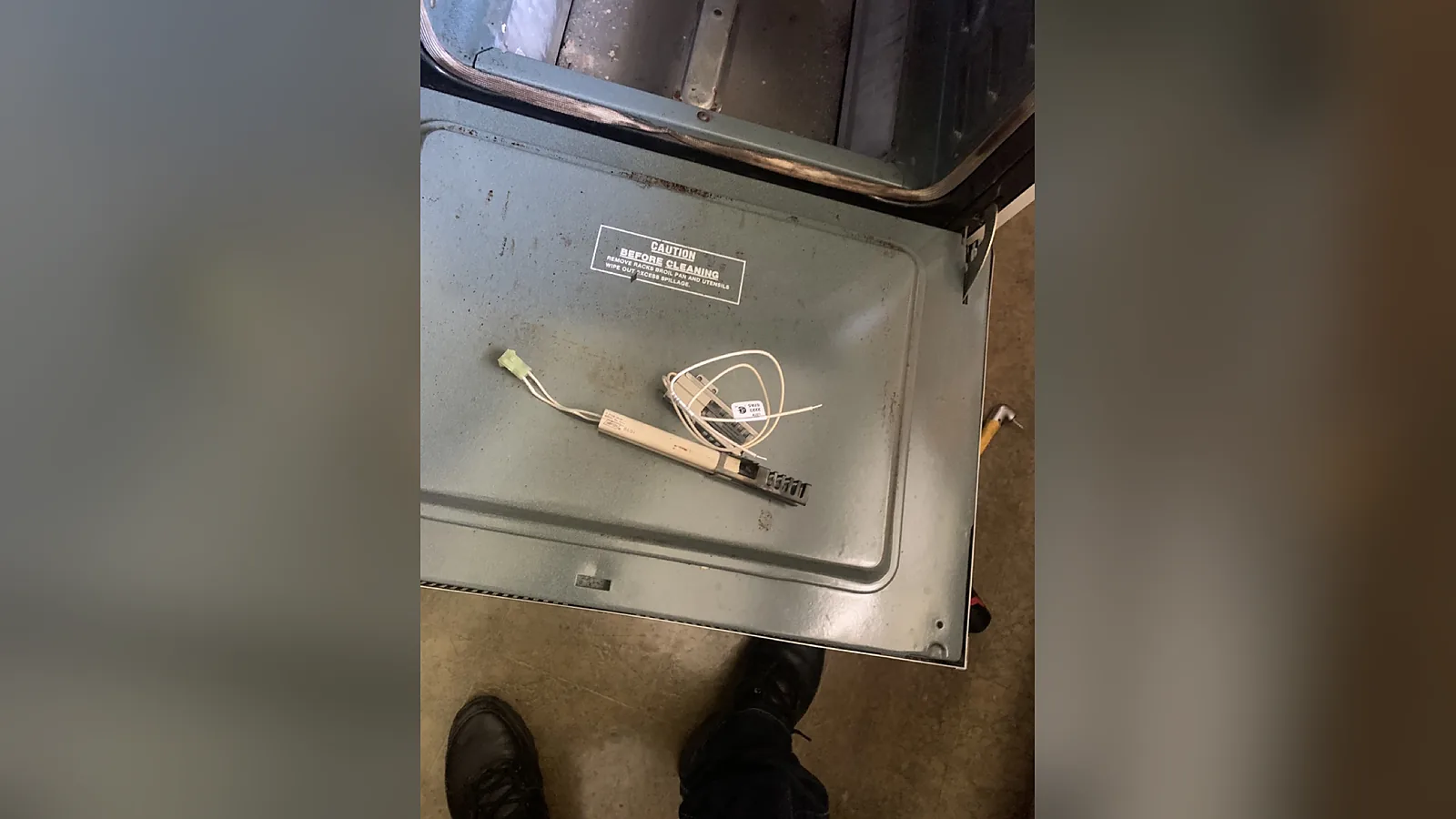
- Watch the heat source. On a gas oven, the igniter at the back of the oven floor should glow and the burner should light within about a minute. On an electric oven, the bake element should glow evenly, with no blisters, cracks or dark sections.
- Test the broiler. Switch to Broil for two minutes. The top element should glow end to end, or the gas broiler should light across its whole length. Many holiday recipes finish under the broiler, and it's the part people test least.
- Check the door. Close the door on a sheet of paper at a few spots around the gasket. The paper should drag when you pull it. A door that drops, bounces open or lets the paper slide out leaks heat for the whole roast.
- Light every burner. Run each cooktop burner on high and on low. You'll need all of them at once on the day.
- Fit the pan. Put your roasting pan in with the rack where you plan to use it and close the door. Better to find out now that it touches the door glass or blocks the fan.
What do the results mean, and what does the fix cost?
Most failed checks come down to one part. Typical prices below are for Los Angeles, Orange and Ventura counties with parts and labor; the exact price is written before any work starts.
| What you noticed | Likely cause | What to do | Typical LA price |
|---|---|---|---|
| Gas oven: igniter glows a minute or more before the burner lights, or never lights | Weak bake igniter | Book a repair; it won't improve on its own | $170–$320 |
| Electric oven: element has a blister, a break or a section that stays dark | Failed bake or broil element | Stop using that function; book a repair | $180–$340 |
| Thermometer reads 25–50 degrees off, the same way every time | Calibration or a drifting temperature sensor | Try the temperature offset in the settings menu (see your manual); if it won't hold, book a repair | $160–$280 for a sensor |
| Temperature swings widely or the oven shuts off mid-bake | Sensor, relay or control board | Book a repair | $280–$650 for a relay or board |
| Door won't close flat or the paper slides out | Worn hinges or gasket | Book a repair | $180–$360 |
| Display dark or showing a code | Power, control lock or the control | Start with our guide to an oven that won't turn on | Varies |
Why a small temperature error matters on this meal: the USDA's turkey roasting guidance says to set the oven no lower than 325°F and to cook the bird to 165°F measured with a food thermometer. An oven that runs 40 degrees cool turns a 325°F roast into a much longer one, and dinner moves with it. Whatever your oven does, trust a meat thermometer over the clock.
If the display shows a letter-and-number code on a GE range, our GE oven F-code guide decodes it, and our GE repair page covers what we fix on those models.
Should you self-clean the oven before Thanksgiving?
Not this week. A self-clean cycle runs the oven far hotter than any cooking and for hours, and that's when marginal parts fail: thermal fuses open, door locks stick and control boards overheat. An oven that locks itself shut or goes dark two days before the meal is a common holiday call, and our guide to an oven door locked after self-clean explains what happens.
Clean by hand now: remove the racks, wipe out loose debris and spills on the oven floor so they don't smoke, and save the self-clean for a quiet week in December when a failed part won't cost you a holiday.
Gas ranges: what's normal and what isn't?
A gas oven lighting with a soft whoosh a few seconds after the igniter glows is normal. A loud boom on lighting, a burner that lights and goes out, or a glow that never produces a flame is not; stop using the oven and book a repair. Our guide to an oven igniter glowing but not lighting shows the difference.
If you smell gas, don't light anything or touch switches. Leave, then call SoCalGas at 1-800-427-2200 or 911 from outside.
When should you call a technician?
Call this week if the oven failed any check above. The reason is parts, not labor: an igniter or element for a common range is often on the truck, but a control board, a door hinge set or a part for a built-in oven may have to be ordered, and shipping doesn't speed up for a holiday.
Call (866) 696-7767 or book online. The oven diagnostic is $69 and is applied to the repair you approve, with no travel charge, and calls placed before noon are usually seen the same day. We work on ovens and ranges across the area, from Glendale to Orange County; what we check is on our oven repair page. We're an independent repair company and use OEM parts whenever they're available.
If it can't be fixed in time, plan around it: a countertop roaster or an outdoor grill can take the turkey, and the oven's working functions can handle the sides. A technician will tell you plainly at the diagnostic whether the part will make it.
Frequently asked questions
How do I test my oven temperature at home?
Put an oven thermometer on the middle rack, set Bake to 350°F and wait 20 minutes. Read it through the window without opening the door. Within about 25 degrees of the setting is normal. If it's off by more, the same way every time, use the temperature offset in your oven's settings or have the sensor tested.
Should I run self-clean before Thanksgiving?
No. Self-clean runs far hotter than cooking, and it's when thermal fuses, door locks and control boards most often fail. Wipe the oven out by hand before the holiday and run self-clean afterward, when a failed part won't leave you without an oven for the meal.
How much does it cost to fix an oven that isn't heating right?
In Los Angeles, a bake or broil igniter typically costs $170–$320, a bake or broil element $180–$340 and a temperature sensor $160–$280, parts and labor included. A relay or control board runs $280–$650. The $69 diagnostic is applied to the repair you approve.
Can an oven be repaired the same day before a holiday?
Often, if the part is common. Calls placed before noon are usually seen the same day, and igniters and elements for mainstream ranges are frequently on the truck. Control boards, hinges and parts for built-in ovens may need ordering, which is why testing a week or two ahead matters.
What's your oven doing?
Oven failed the check? Call before noon and we can usually be there today.
- Diagnostic
- $69applied to the repair
- Same-day
- Call before noonMost LA, OC & Ventura calls seen today
- Warranty
- 30–90 daysparts and labor