Short answer: A refrigerator water dispenser not working is usually simple: the dispenser lock is on, a new filter isn’t seated (or an old one is clogged), the supply valve is closed or the line is kinked, or the water line in the door has frozen. If those check out, the water inlet valve ($170–$300 in LA) or dispenser switch has failed.
This guide is for anyone whose refrigerator dispenser has gone dry, slowed to a trickle or started sputtering. It walks through the eight causes in the order we check them, cheapest first, with the tells that separate them and what each fix costs in Los Angeles and Orange County.
Why is my refrigerator water dispenser not working?
Most dead dispensers have a free fix: a lock, a filter, a closed or kinked supply line, or a frozen line in the door. The symptom narrows it down fast:
- Neither water nor ice from the door: the lock, the filter, the supply line, low pressure or the inlet valve.
- Ice works, water doesn’t: a frozen line in the door, the dispenser side of the inlet valve, or the dispenser switch.
- Slow or sputtering: a clogged or new filter, air in the line, or low pressure.
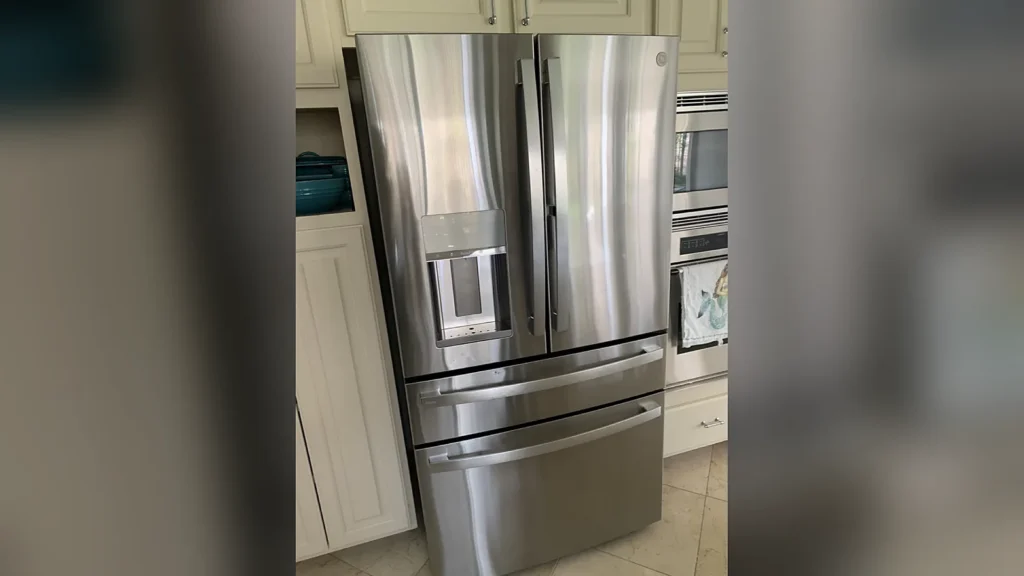
On a French-door refrigerator like the one in the photo above, from one of our service calls, the dispenser sits in the left door, so its water line runs through the door hinge. That’s why door-line freezes and door-switch faults are their own category.
What are the 8 causes, in the order to check them?
Work down the list; the first four are usually free to fix or cost only a filter.
| Cause | Tell | Fix | Typical LA price |
|---|---|---|---|
| 1. Dispenser lock or Sabbath mode | Lock icon; neither ice nor water dispenses | Turn it off per the manual | Free |
| 2. Filter not seated, wrong or clogged | Began after a filter change, or filter over 6 months old | Reseat, replace, flush | Cost of the filter |
| 3. Supply valve closed or line kinked | Began after the fridge was moved or plumbing work | Open the valve fully, straighten the line | Free |
| 4. Frozen water line in the door | Ice works, water doesn’t; fridge set very cold | Raise the temperature, thaw | Free if it thaws |
| 5. Low water pressure or reverse osmosis | Weak flow at the sink too; under 8 oz in 20 seconds | Plumber or RO service | Not an appliance repair |
| 6. Water inlet valve failed | No hum or click when you press the paddle | Replace the valve | $170–$300 |
| 7. Dispenser switch or paddle | Paddle feels loose; nothing happens at all | Replace the switch | Quoted after testing |
| 8. Control board | Parts test good but the board sends no power | Replace the board | $280–$620 |
The water inlet valve is the electric valve at the back of the refrigerator that opens when you press the paddle; it usually has one side for the dispenser and one for the ice maker. The control lock, often labeled Lock or Child Lock, disables the dispenser without cutting power, as Whirlpool’s dispenser guide notes.
Why did the dispenser stop after a filter change?
A new filter that isn’t fully locked in, a cartridge for the wrong model, or air trapped behind it are the usual reasons. Whirlpool’s test: take the filter out and try the dispenser. If water flows, the filter wasn’t seated; reinstall it until it locks. On models that need a bypass plug when the filter is out, use the plug for the test.
Then hold a glass against the paddle for one to two minutes to purge the air. Sputtering for a short while is normal; sputtering that never settles points to a kink or low pressure.
Why does the fridge make ice but not dispense water?
The ice maker and the dispenser share the same supply, so a working ice maker means the water is reaching the refrigerator and the fault is past the split. A common culprit is a frozen line in the door, which shows up when the refrigerator is set very cold. LG’s advice, in its dispenser troubleshooting guide: raise the temperature setting a degree or two and thaw frozen parts with a warm, damp towel or steam.
Give it a day. If water returns and then stops again within days, the line is refreezing for a reason, such as a door that doesn’t seal or a setting that’s too cold, and a technician should find it. If it never returns, the dispenser side of the inlet valve or the dispenser switch is next.
What can you check yourself?
These checks are safe if you keep water away from wiring. Unplug the refrigerator before pulling it out or touching anything at the back, where the inlet valve’s 120-volt connections sit next to the water fittings.
- Look for a lock or Sabbath icon on the display and turn it off as the manual describes.
- Reseat or replace the filter, then flush for one to two minutes.
- Check the supply. Make sure the shutoff valve is fully open and the line behind the refrigerator isn’t kinked or pinched against the wall.
- Run a flow test. In GE’s test, 20 seconds of dispensing should fill at least 8 ounces. Less with the filter removed or bypassed means low pressure or a restricted valve.
- Listen at the paddle. Press it in a quiet kitchen. A hum or click with no water suggests a frozen line or no supply; silence suggests the switch, the valve’s coil or the board.
Stop and call if you find water pooling under the refrigerator, a leaking fitting or wet wiring. Close the shutoff valve first.
When should you call, and what does the repair cost?
Call when the lock, filter, supply and a day of thawing haven’t brought the water back. Typical Los Angeles County and Orange County prices, parts and labor: water inlet valve $170–$300, control board $280–$620; a dispenser switch is quoted after testing. Each is well under the cost of a new refrigerator, so on a unit with life left, repair usually wins under the 50% rule.
The refrigerator diagnostic is $85 and is applied to the repair, with the exact price written before work starts and no travel charge in either county. Calls placed before noon are usually seen the same day. Call (866) 696-7767 or book online, or read more about our refrigerator repair service.
If the ice side has problems too, see why an ice maker stops making ice or, for a slow fill, ice maker making small cubes.
Frequently asked questions
Why did my water dispenser stop working after I changed the filter?
Usually the new filter isn’t fully locked in, it’s the wrong cartridge, or air is trapped behind it. Whirlpool’s test: remove the filter and try the dispenser; if water flows, reinstall the filter until it locks. Then dispense for a couple of minutes to push the air out.
Why does my fridge make ice but not dispense water?
The ice maker and the dispenser share the water supply, so a working ice maker points past the split: a frozen line in the door, the dispenser side of the inlet valve, or the dispenser switch. Check for a lock first, then raise the refrigerator temperature a degree or two for a day.
How do I get air out of my refrigerator water line?
Hold a glass against the paddle and dispense for one to two minutes, as Samsung suggests, until the flow runs steady instead of sputtering. Some sputtering is normal right after a filter change or a new installation. If it never settles, check that the filter is seated and the line isn’t kinked.
How much does it cost to fix a refrigerator water dispenser in Los Angeles?
Many fixes cost nothing: a lock, a filter, a kink or a frozen line. When a part has failed, a water inlet valve is typically $170–$300 and a control board $280–$620, parts and labor. The $85 refrigerator diagnostic is applied to the repair.