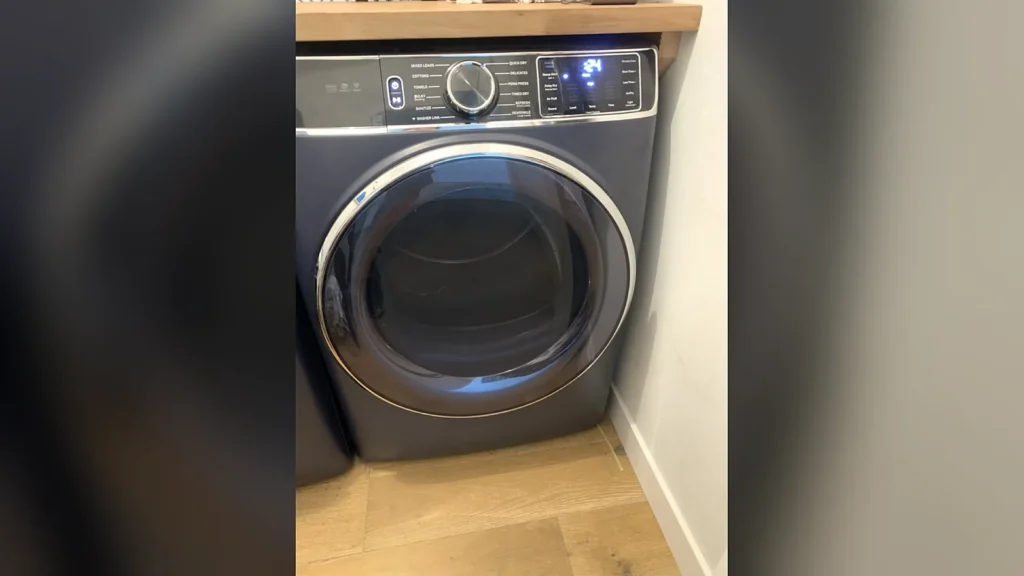
Short answer: When a dryer takes too long to dry but still gets warm, the cause is usually airflow: a clogged lint screen or a crushed, kinked or lint-packed vent. Next come dirty moisture-sensor bars, energy-saving settings, overloaded or poorly spun loads, and weak heat from a failing element, thermostat or gas valve. Part repairs typically cost $140–$320 in Los Angeles.
This guide is for anyone whose dryer still makes heat but now needs a second cycle: towels damp at the seams, jeans wet at the waistband. It covers the causes in the order we find them, the checks you can do in about 15 minutes, and when a part is worth replacing.
Slow drying or no heat: a five-minute test
A dryer that dries slowly and a dryer that makes no heat have different causes. Run the empty dryer on a timed, high-heat cycle for five minutes and feel the drum. Warm means the heat works and this guide applies. Cold means a no-heat fault, covered in dryer not heating: gas and electric causes; LG owners seeing Flow Sense bars or d-codes should also read our LG dryer guide.
Then think about how the slowdown arrived. Drying that got slower month by month points to lint in the vent; drying that got slow overnight points to a failed part or something that just changed, like a setting or a dryer pushed back against the wall.
Why does my dryer take so long to dry?
A dryer takes too long when moist air can’t leave fast enough or the heat is weaker than it should be. These are the causes in the order we find them.
1. The vent is restricted
Whirlpool puts it plainly: if a dryer heats but still has long dry times, the likely cause is a vent issue or restricted airflow. Lint builds along the run, the duct gets crushed behind the dryer, or a stuck flap or a nest blocks the outside cap. Whirlpool calls for 4-inch metal duct, never foil or plastic, run short and straight, with the hood at least 12 inches off the ground; some Whirlpool dryers show Check Vent (AF), and LG dryers show Flow Sense bars or d-codes.
In LA the long runs are in condos and apartments, where the laundry closet often sits mid-unit and the duct crosses ceilings to an outside wall or the roof. A dryer on a service porch or garage wall usually has a short run. That lint is also fuel: the National Fire Protection Association’s dryer safety tip sheet (2016) names failure to clean as the leading cause of home clothes dryer and washer fires and advises cleaning the vent pipe once a year, or more often if drying takes longer than normal.
2. The lint screen is coated
A lint screen can look clean and still block air, because fabric softener and dryer sheets leave a waxy film on the mesh. Hold the screen under the tap: if water pools instead of running through, wash it with a nylon brush and hot, soapy water, as the appliance manufacturers’ association AHAM recommends.
3. The load or the settings
LG suggests filling the drum only about halfway and notes that unspun laundry takes a long time to dry, so dripping clothes point to the washer’s spin. Energy-saving options trade time for power: Whirlpool says EcoBoost adds about 40 minutes, and LG’s Energy Saver air-dries without heat for most of the Cotton/Normal cycle.
4. The moisture-sensor bars are dirty
Automatic cycles end when metal sensor bars inside the drum, usually near the lint screen, stop detecting moisture. Softener residue makes them misread and end the cycle early; LG recommends wiping them monthly, and Whirlpool notes an unlevel dryer can keep clothes off the sensors. Tell: automatic cycles end damp, but a timed cycle dries the same load.
5. The heat is weaker than it should be
Some parts fail halfway. One Whirlpool design uses two 2,700-watt elements instead of one 5,400-watt element; if one opens, the dryer still warms but drying drags. A misreading cycling thermostat or thermistor (temperature sensor) shuts the heat off early, and weak gas-valve coils let a burner light and go out repeatedly.
6. Building power or a ventless design
Some large apartment and condo buildings supply 208 volts instead of 240. Heater output falls with the square of the voltage, so a 240-volt element on 208 volts makes about three-quarters of its rated heat. Ventless condenser and heat-pump dryers take longer by design and slow further when their lint filters or condenser clog.
How much does it cost to fix a slow dryer?
Typical Los Angeles County and Orange County prices, parts and labor, for mainstream dryers; the exact price is written before any work starts.
| Cause | How it shows up | Fix | Typical LA price |
|---|---|---|---|
| Coated lint screen | Water pools on the mesh | Wash the screen | Free |
| Crushed or foil duct behind the dryer | Slow right after the dryer was moved | 4-inch metal duct | Cost of the duct |
| Lint-packed vent run or blocked cap | Slower every month; hot laundry room | Clean the full run | See our vent cleaning cost guide |
| Settings or load size | Slow on one cycle or with big loads | Change the setting; half loads | Free |
| Dirty moisture-sensor bars | Automatic cycles end damp | Wipe the bars monthly | Free |
| Cycling or high-limit thermostat | Heat cuts out early; drum only warm | Replace the thermostat | $140–$240 |
| One of two heater coils open | Warm, never hot, on every cycle | Replace the element | $180–$320 |
| Weak gas-valve coils | Heat comes and goes mid-cycle | Replace the coils | $170–$320 |
| 208-volt building supply | Slow since the day it was installed | Measure at the outlet | No repair needed |
15-minute checks you can do
- Wash the lint screen and make sure it seats fully.
- Reset the settings: turn off EcoBoost or Energy Saver and choose normal or high heat.
- Test a half load of similar fabrics that came out of a normal washer spin.
- Feel the airflow outside while the dryer runs: the flap should open fully and blow strongly. Don’t climb onto a roof to check.
- Check the duct behind the dryer. Unplug it first, and move a gas dryer gently so the gas line isn’t strained. Straighten any crushed section and replace foil or plastic duct with metal.
- Wipe the sensor bars with a damp cloth, and level the dryer so all four feet touch the floor.
Stop and call if the dryer top or the laundry room gets unusually hot, you smell scorched lint, the dryer shuts itself off mid-cycle, or a breaker trips; unplug it or switch off the breaker first, and don’t run it while you’re out or asleep. If a gas dryer smells of gas, leave and call SoCalGas at 1-800-427-2200 or 911 from outside.
When to call a technician
Call when the vent is clear, the screen and sensors are clean, and loads still take too long, which points to a part, or right away if a stop sign appears. Call (866) 696-7767 or book online; calls placed before noon are usually seen the same day across Los Angeles County and Orange County, and later calls typically the next business day.
The $69 dryer diagnostic (trip, testing and written quote) is applied to the repair you approve, with no travel charge. When a part is needed, it’s usually a $140–$320 repair, which passes our 50% rule (repair when the quote is under half the price of a comparable new dryer) on almost any dryer with life left; dryers typically last about 15 years. See what we fix on our dryer repair page.
Frequently asked questions
Why does my dryer take two cycles to dry?
Usually because moist air can’t escape: a lint-packed or crushed vent, or a screen coated with softener film. If the airflow is good, look at overloaded or poorly spun loads, energy-saving settings and dirty moisture sensors, then at a weak heat part such as an element coil, thermostat or gas-valve coils.
How often should a dryer vent be cleaned?
NFPA advises cleaning the vent pipe once a year, or sooner if loads take longer than normal; Whirlpool suggests every one to two years or whenever drying slows. Long condo runs and roof vents are harder to check, so feel the airflow at the outside cap a few times a year.
Can dryer sheets make a dryer slow?
They can. Fabric-softener residue films the lint screen, blocking air even when the screen looks clean, and coats the moisture-sensor bars so automatic cycles end early with damp clothes. Wash the screen in hot, soapy water and wipe the sensor bars with a damp cloth every month or so.
Why does my dryer take so long in my apartment?
Apartment and condo dryers often vent through long runs to a wall or roof, sit in tight closets that crush the duct, or run on 208-volt building power, which cuts a 240-volt element’s heat by about a quarter. Clean the screen and check the duct first; the building may control the rest of the vent.