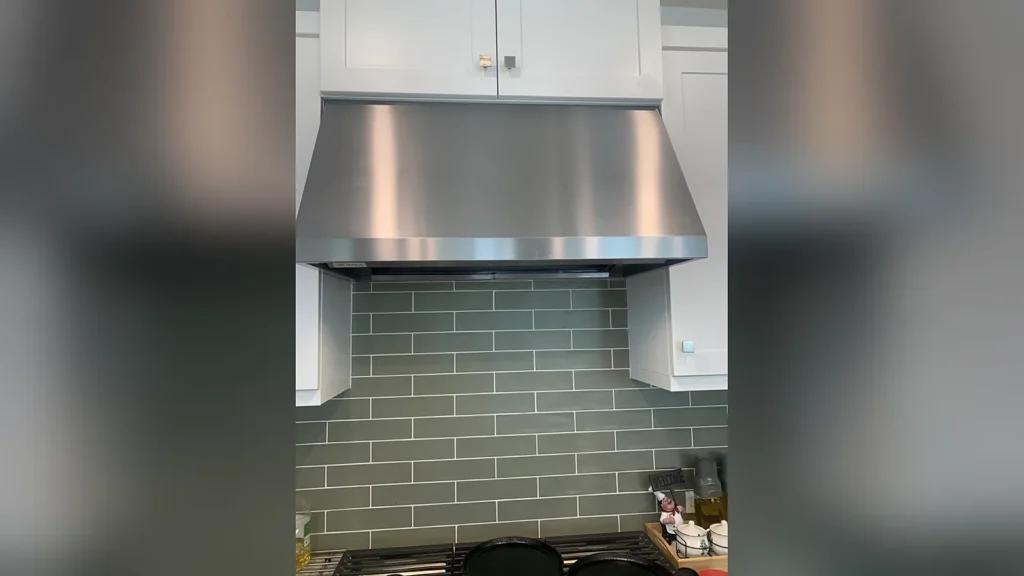
Short answer: A range hood fan not working is usually a failed fan motor or its capacitor, a bad switch or control board, or no power reaching the hood. Weak suction usually means clogged grease filters, a stuck backdraft damper or a restricted duct. Clean the filters and reset the breaker first; a new fan motor typically runs $220–$420 in Los Angeles.
For anyone whose kitchen hood has gone quiet, hums without spinning, or runs but leaves the kitchen smoky, including the over-the-range microwaves that double as hoods in many LA apartments and condos.
First, find where the fan is
A range hood’s fan isn’t always in the hood, and that changes what to check.
- Under-cabinet, wall and island hoods: the motor and blower sit inside the hood, behind the filters.
- Custom hoods: a blower insert hides inside the cabinetry.
- Professional hoods with a remote blower: the motor sits in the duct or on the roof or an outside wall; the hood holds only the controls, lights and filters.
- Over-the-range microwaves: the vent fan is inside the microwave.
- Ducted or recirculating: a ducted hood pushes air outside; a recirculating hood passes it through a charcoal filter and back into the room.
Why is my range hood fan not working at all?
A dead range hood fan comes down to power, the switch or control board, or the motor, and what still works tells you which.
| Symptom | Likely cause | Check first | Typical LA repair |
|---|---|---|---|
| Nothing works, lights or fan | No power, or a failed control board | Reset the breaker; check the plug in the cabinet above | Control board $240–$480 |
| Lights work, fan silent on every speed | Fan switch or control board | Reset the breaker | Switch $150–$280; board $240–$480 |
| Fan hums but won’t spin | Motor capacitor, seized motor, or a blower wheel jammed with grease | Breaker off, then turn the blower wheel by hand | Fan motor $220–$420 |
| Runs a few minutes, then stops | Motor overheating and tripping its thermal cutout | Clean the filters | Fan motor $220–$420 |
| Works on only one speed | Speed switch, control board or capacitor | Try every speed after a reset | Switch $150–$280 |
| Lights out, fan fine | Bulbs or LED driver | Replace bulbs as the manual says | LED driver $150–$280 |
| Hood lights on, remote blower silent | Remote blower motor, its power or wiring | Find where the blower is mounted | Remote blower service $320–$650 |
A capacitor is the small canister that gives many hood motors their starting kick. When it fails, the motor hums but can’t turn.
Why does my range hood have weak suction?
Weak range hood suction is an airflow problem, and the filters are the first suspect. In the order we find them:
- Grease-loaded filters. Viking’s support FAQ recommends cleaning baffle and mesh filters at least monthly, more often if you fry, grill or wok-cook. Grease left in a hood is also a fire risk.
- An old charcoal filter. Recirculating hoods depend on it. It isn’t washable, and Whirlpool says it lasts up to six months.
- A stuck backdraft damper. The flap at the hood outlet or the outside cap can glue shut with grease or bend. The fan sounds normal but moves little air.
- A restricted duct. Crushed flexible duct, a long run with many elbows, a duct smaller than the hood outlet, a loose joint or a clogged outside cap. Tell: suction was weak from the day the hood went in.
- Not enough makeup air. Whirlpool’s vent hood troubleshooting notes that a tight house can’t replace the air a hood exhausts. Tell: suction improves when you crack a window.
- Drafts and habits. Ceiling fans and A/C registers pull smoke away from the hood. Whirlpool recommends starting the hood before you cook and running it a few minutes after.
Safe checks before you call
Most range hood checks need only a breaker, hot water and a flashlight. Turn the cooktop off and let the hood cool first.
- Reset the power. Whirlpool’s fan-not-working steps say to switch the hood’s breaker off for one minute, then back on. If the hood plugs into an outlet in the cabinet above, make sure the plug is fully in.
- Wash the grease filters in hot water and dish detergent, or in the dishwasher if your manual allows it. Skip ammonia and other alkaline cleaners, which Viking says can darken the filters.
- Replace the charcoal filter if the hood recirculates.
- Check the damper. With the breaker off and the filters out, use a flashlight to see whether the flap moves freely. Don’t force it.
- Test with a window open. If suction jumps, the hood is fine and the kitchen needs makeup air.
- Find the blower. No motor in the hood? Look for one on the roof or an outside wall and listen there with the fan on. Don’t climb onto the roof.
Stop if you smell burning or see scorched plastic, if the breaker trips again, or if the next step means opening the motor housing or touching wiring. Never open an over-the-range microwave: its high-voltage capacitor can hold a dangerous charge even when unplugged.
Why is my over-the-range microwave vent fan not working?
An over-the-range microwave is a range hood with a microwave built in: its fan pulls air through grease filters on the underside and vents it outside or back into the room.
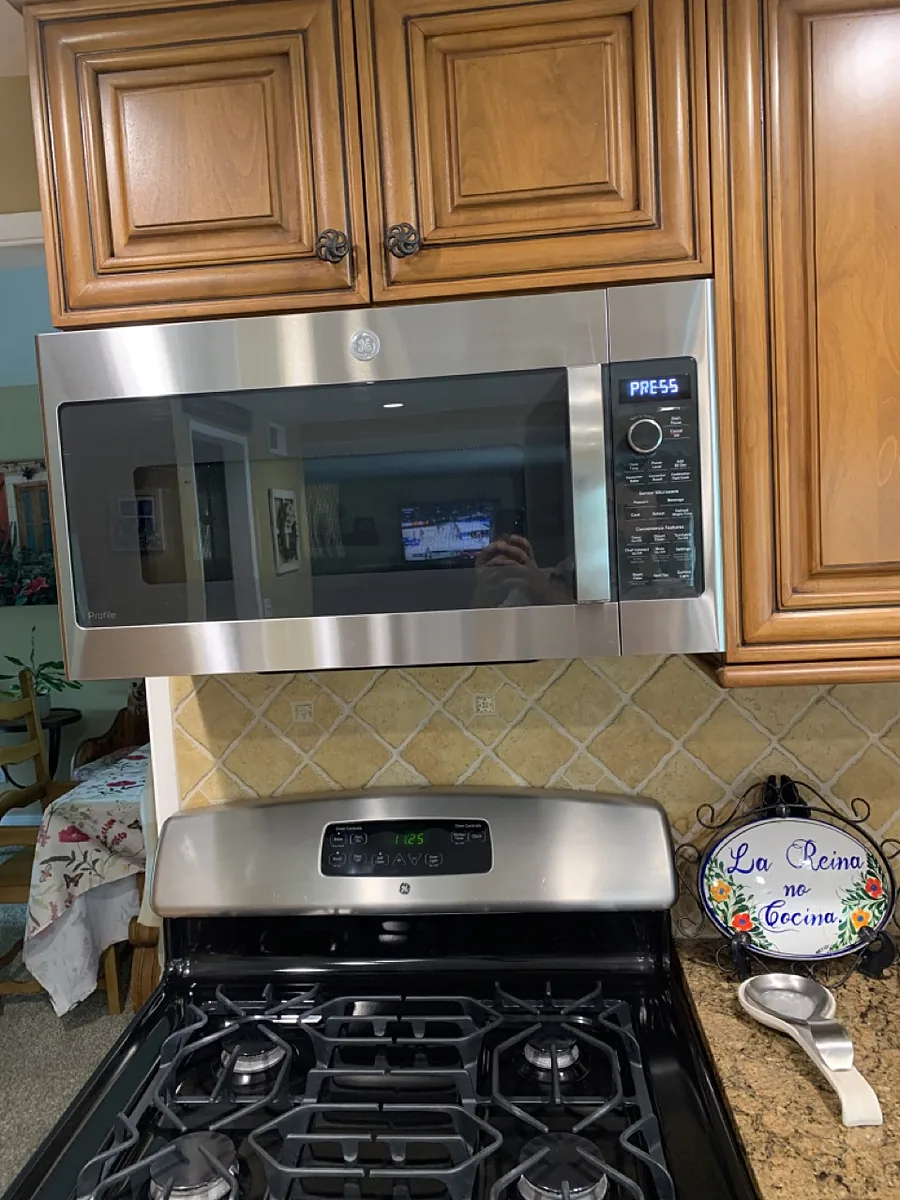
The same filter and breaker checks apply to a microwave, but stop there. The vent motor, its switch and the control board sit inside the microwave cabinet next to high-voltage parts, so the repair is a technician’s job. If the microwave has stopped heating too, see microwave not heating.
Is a range hood worth repairing?
A range hood is usually worth repairing unless it’s an entry-level model. Use the 50% rule: repair when the written quote is under half the installed price of a comparable new hood and the hood has life left. On a basic under-cabinet hood, a $220–$420 motor can approach the price of a new hood, so replacing it may be the better value, and we’ll say so. Professional hoods, custom inserts and remote blowers are built into the kitchen, so repair almost always wins.
The diagnostic for range hoods and microwaves is $69, applied to the repair you approve, with the same fees across LA County and Orange County, no travel charge and a written price before work starts. A restriction inside a wall or attic duct is usually a contractor’s job, and the diagnostic tells you which. Wolf’s limited five-year warranty covers hood blower motors as parts only; with independent service, you get that part from Wolf.
When to call a technician
Call a technician when a range hood fan is still dead after a breaker reset, hums without spinning, trips the breaker or smells hot, or when a remote blower is involved. If you cook on gas, don’t wait long: the hood is what carries combustion byproducts and moisture out of the kitchen.
Pros Fix Appliances repairs under-cabinet, wall, island, insert and downdraft hoods, including professional hoods with remote blowers, across Los Angeles County and Orange County. Calls placed before noon are usually seen the same day; later calls are typically seen the next business day. Call (866) 696-7767 or book online. We repair the burners under the hood too (see stove and cooktop repair), and if a Wolf or Viking burner won’t stop sparking, read Wolf or Viking range igniter clicking.
Frequently asked questions
Why do my range hood lights work but the fan doesn’t?
Power is reaching the hood, so the fault is in the fan circuit: the fan switch or control board, the motor’s capacitor, or the motor itself. A hum with no spin points to the motor or capacitor; silence points to the switch or board. In Los Angeles a new fan motor typically runs $220–$420.
How often should I clean range hood filters?
Monthly is a sensible default. Viking recommends cleaning baffle and mesh filters at least once a month, more often if you fry, grill or wok-cook. Charcoal filters on recirculating hoods can’t be washed; Viking says to replace them every 6 to 12 months, depending on how you cook.
Why does my range hood fan turn on by itself?
Many hoods and over-the-range microwaves have a heat sensor that starts the fan or speeds it up when the air underneath gets hot. Viking says its hoods go to full power at 165°F and return to the previous setting below 147°F. It’s a safety feature unless the fan runs with the cooktop cold.